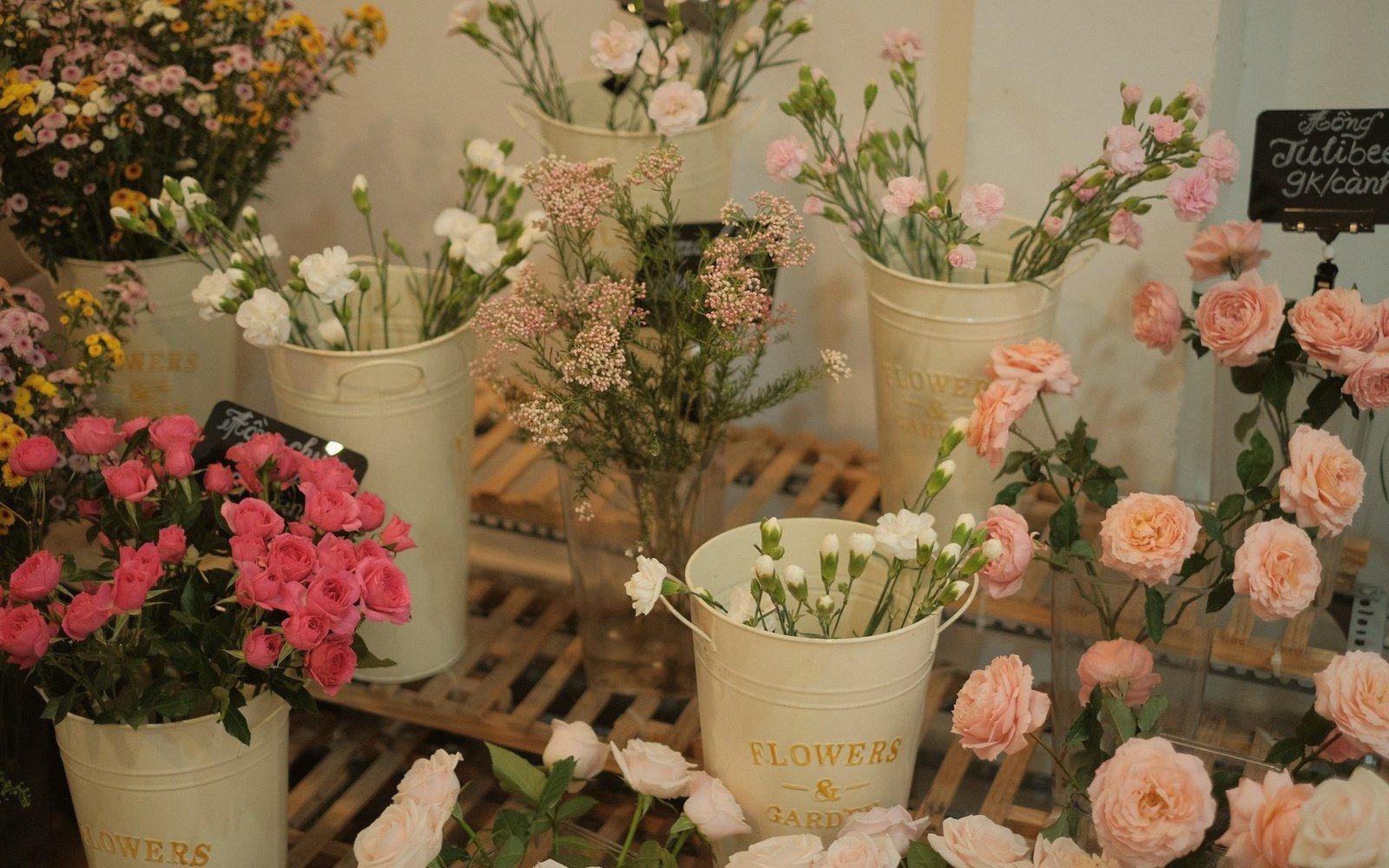
What the flower receives before anyone arranges it
Cut flowers arrive at the workroom in a state of stress. They have been harvested, graded, packed in boxes and moved — sometimes across a continent — and by the time they reach the florist's hands they are partially dehydrated, with air bubbles lodged in their stem ends blocking the uptake of water. Conditioning is the process that reverses that damage before any design work begins, and without it, the arrangement that looks perfect on the morning of a wedding will have wilted before the speeches.

The first step is stripping. Every leaf that would sit below the waterline is removed — not as a cosmetic choice but because submerged foliage rots fast, and rotting plant matter introduces bacteria into the water that clog stems further. Thorns on roses are taken off for the same reason; they also create small wounds that invite bacterial entry. The stripping is done efficiently and without ceremony: this is preparation, not presentation.
Then comes the cut. Each stem is re-cut at an angle, typically with a sharp knife rather than scissors, because scissors compress the stem's vascular tissue before they sever it. The angled cut maximises the surface area open to water and prevents the flat end of the stem from sitting flush against the bottom of a bucket, which would seal it. The critical refinement — the one that makes the most difference — is cutting under water. Holding the stem submerged as it is cut stops air being drawn into the vascular channels the moment they are opened. Even a fraction of a second's exposure to air is enough to form a bubble that partially blocks uptake; cutting under water eliminates that risk entirely.
Once cut, the flowers go into deep, clean buckets — filled to roughly two-thirds of the stem length — and left in a cool, dark space for a minimum of several hours. Many florists condition overnight. The stems drink steadily, cells fill with water, and the flower firms up into what the trade calls a good turgid stem: not limp, not papery, but with a solidity that means it will hold its head when it is placed. Different flowers have different needs at this stage. Woody stems — lilac, viburnum, certain eucalyptus — are sometimes scraped or lightly crushed at the base to open more vascular pathways. Hollow stems like delphiniums are sometimes inverted, filled with water and plugged with a little cotton before being placed upright; the column of water inside the stem slows the rate of wilt dramatically. Bulb flowers such as narcissi release a sap that is mildly toxic to other flowers; they are conditioned separately and rinsed before being mixed into a design.
Water quality and temperature both matter. Cool water — not cold enough to shock tropical varieties, but noticeably cool — slows the respiration of the flower and reduces ethylene production. Ethylene is the gas that accelerates ageing in cut flowers, and any reduction in its production extends the flower's functional life. Some florists add a commercial flower-food to the conditioning water, which combines a sugar to feed the flower, an acidifier to lower the pH and improve water uptake, and a biocide to control bacterial growth. Others keep it plain and work with impeccably clean buckets. The discipline of keeping buckets scrubbed is not fussiness; bacterial contamination in reused buckets is one of the most common causes of premature wilting.
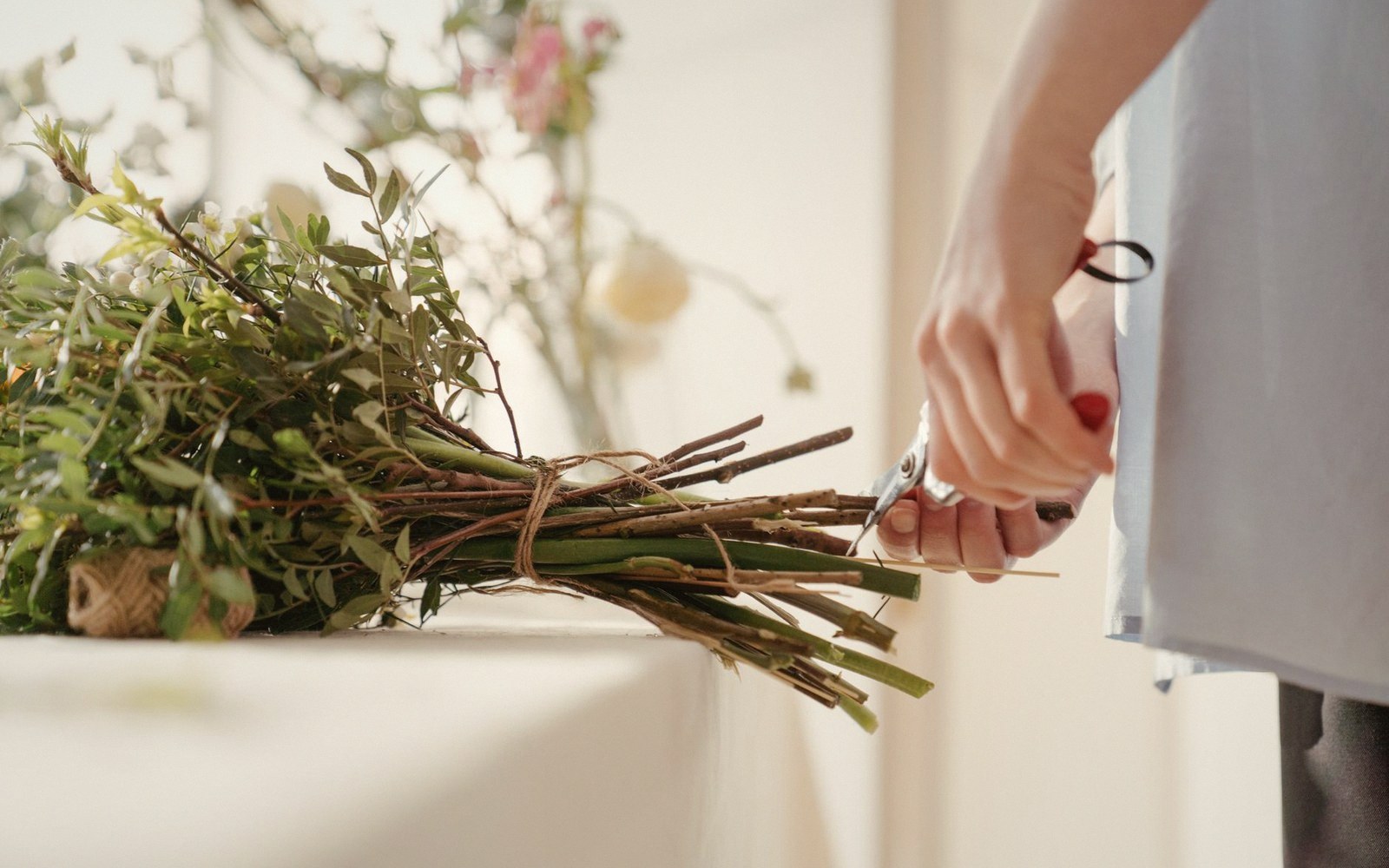
A conditioned flower and an unconditioned one can look identical at ten in the morning. By four in the afternoon, in a warm room, the difference is visible to anyone in the room. The conditioning hours are invisible to the client and completely unromantic — stripped stems and plastic buckets lined up in the dark — but they are the reason the arrangements survive the day. Every hour spent before design work begins is, in effect, borrowed time at the other end, when the flowers are where they need to be.