
Why the finish waits
A ring leaves the bench in stages. The metal is formed, soldered, sized and refined over days or weeks, but two operations are deliberately left until the end: final polishing and, where a stone is involved, setting. Both are vulnerable in a way that earlier work is not.
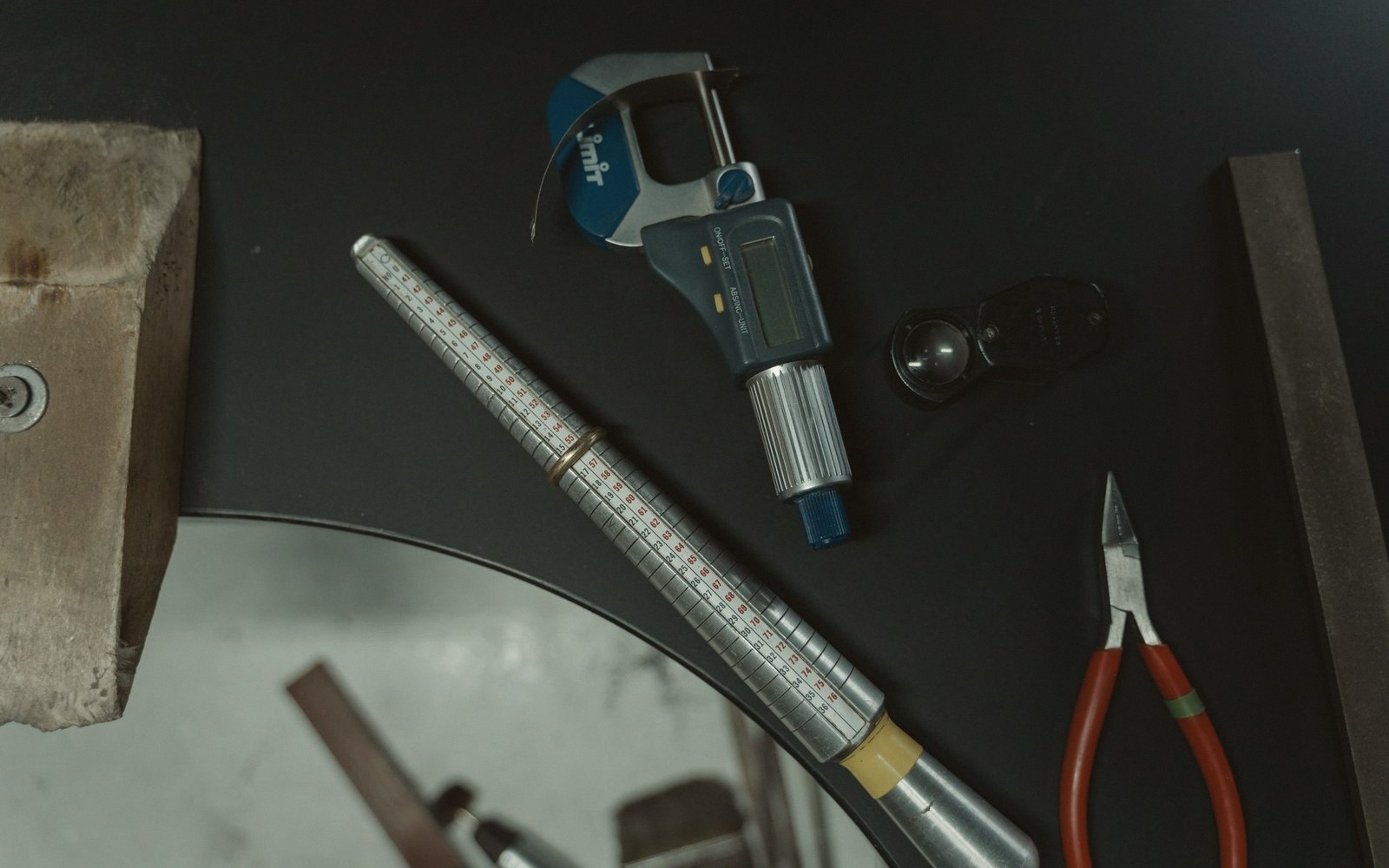
Polishing opens the metal. A mop wheel charged with rouge or Tripoli compound cuts a microscopic layer from the surface, and the heat and friction of that process can shift the geometry of a setting just enough to matter. So the setter works before the polisher, and the polisher works last among the bench operations — but neither works until the maker is confident the piece will not be touched again by a hammer, file or mandrel. Any subsequent repair reopens scratches and kills the finish.
Stone-setting carries its own logic. A set stone is held by prongs or a bezel that have been pressed or burnished tightly against the girdle of the gem. If the ring then needs adjustment — a last-minute sizing because a finger measured cold is now measured warm — the setter must remove the stone, reopen the mount, and begin again. Every repetition is a risk to both metal and stone. Makers who have done this once tend not to do it twice.
The last week before collection is therefore a controlled pause. The ring sits finished to a pre-polish state, inspected, approved, and kept off the bench. Stone-setting is booked for two or three days before handover — close enough to avoid accidental damage in the workshop, far enough to allow for one final check under a loupe and, where legally required, to confirm the hallmarking assay came back clean. Polish follows setting within hours.
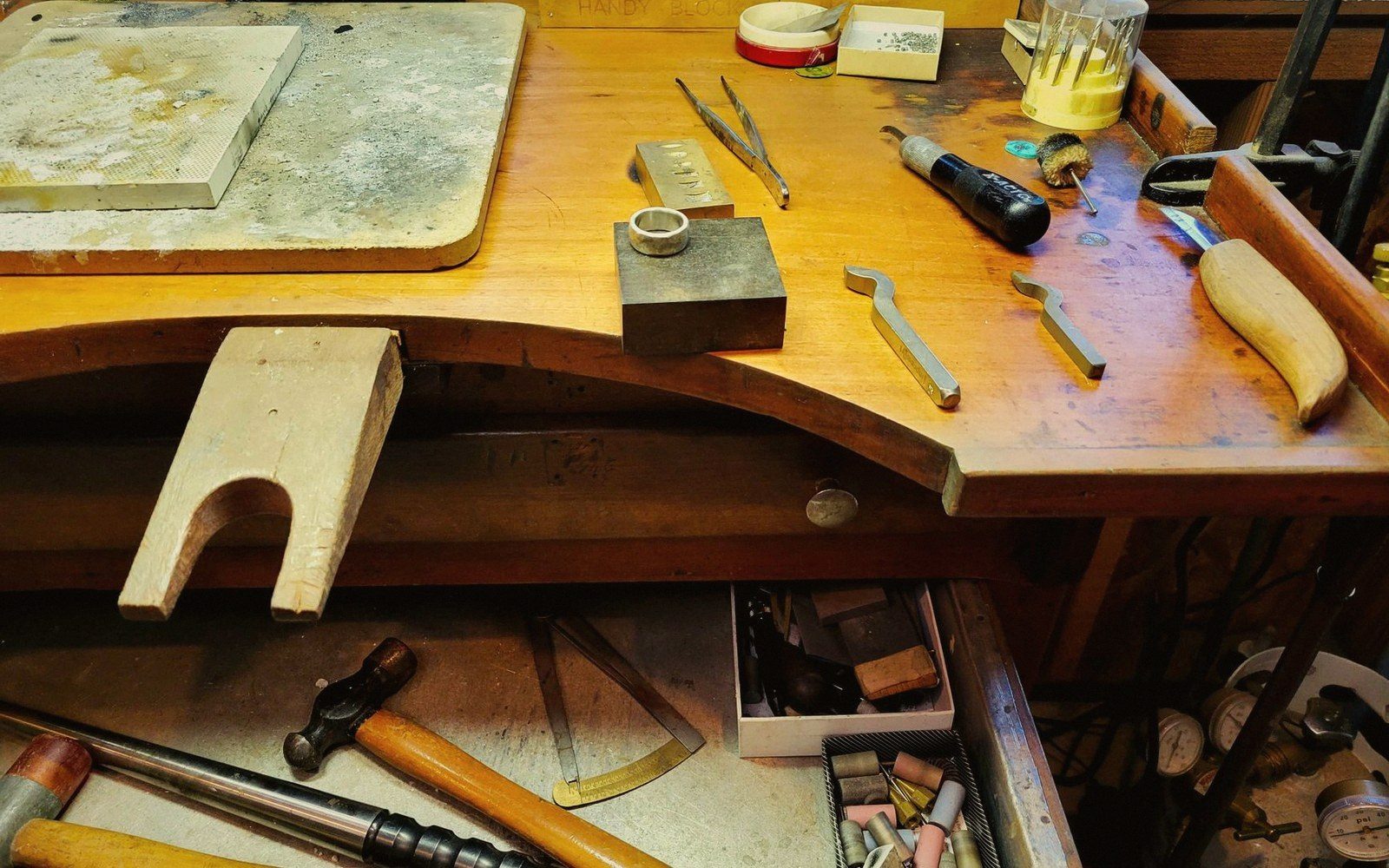
What looks like a maker cutting it fine is actually the opposite: a deliberate structure built around the fact that the last thing done to a ring is the thing most damaged by anything that comes after it.