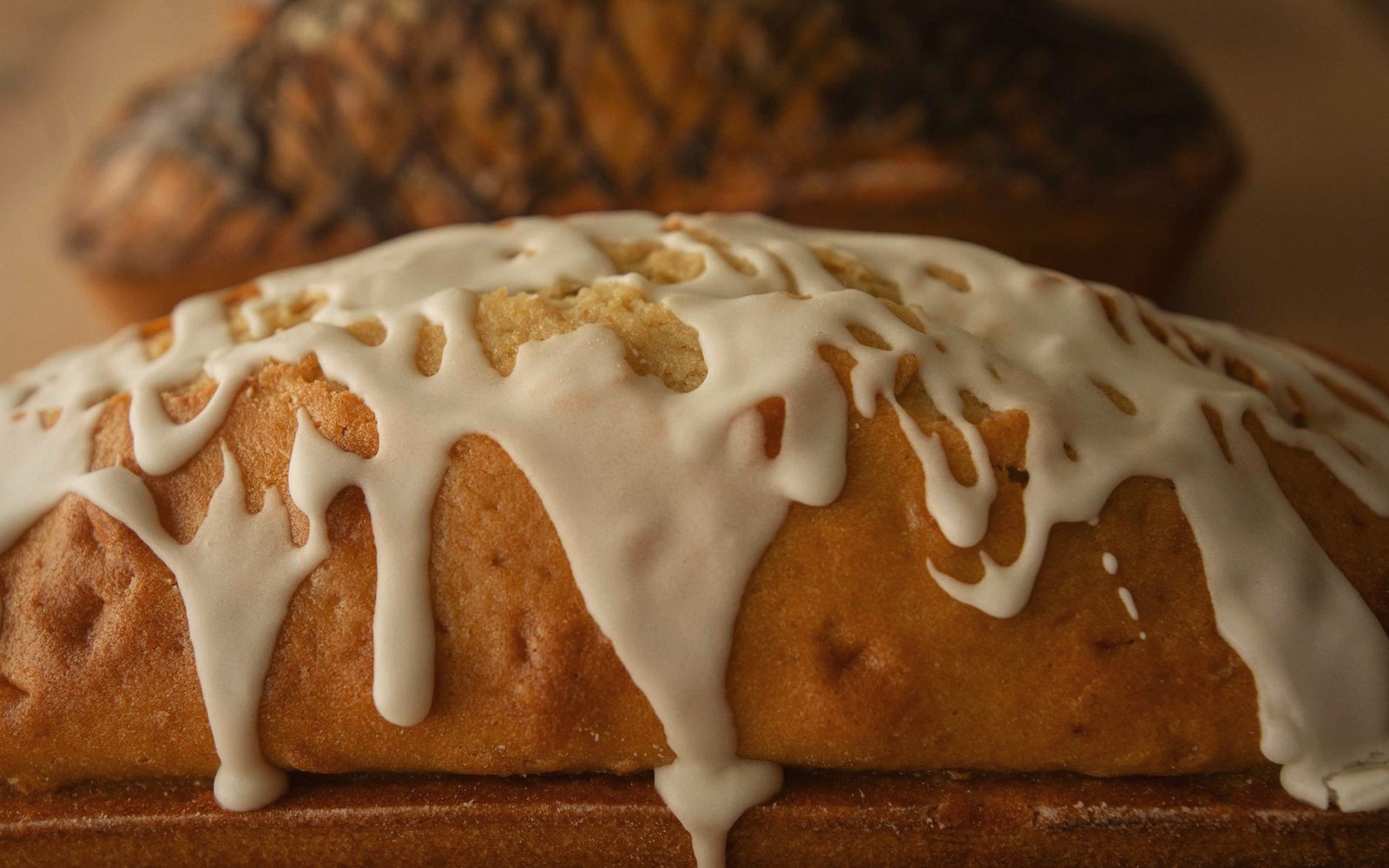
Why the room wins every time
A finished wedding cake is a stable object — until it meets a marquee in August, a conservatory with a glass roof, or a reception room where the heating has been left on since morning. Sugar, fat and moisture all have thresholds, and a venue's ambient conditions hit them faster than most people expect.
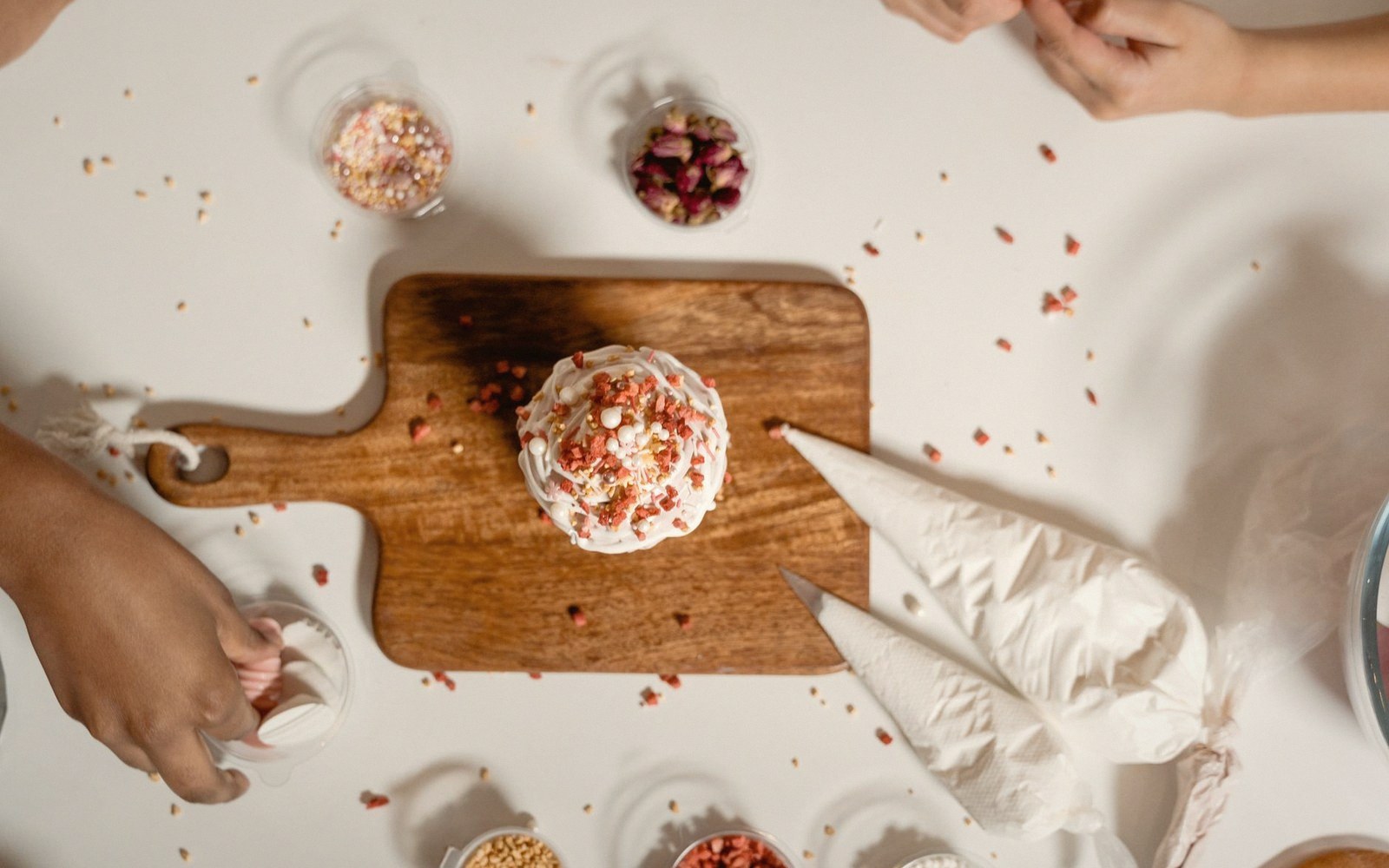
The two main failure modes are distinct. Buttercream is an emulsion: above roughly 25°C it begins to separate, and a tiered cake will start to lean before the first course is finished. Fondant does something different and in some ways worse — it does not melt so much as sweat. Condensation forms on its surface when a cold cake meets a warm, humid room, and the finish goes tacky, then shiny, then starts to weep. Sugar flowers, which are made weeks ahead and dried to brittleness, can absorb ambient moisture in a humid room and soften at their bases, making them droop or snap clean off.
The structural tier system — boards and dowels carrying each layer — is built to handle the weight of a static cake at normal temperature. What it cannot compensate for is a softened buttercream dam between tiers, which is what actually holds the filling in and maintains the profile of each layer. When that softens, the filling migrates and the cake reads as lopsided before anything has technically collapsed.
The professional response is threefold: ganache as an undercoat rather than buttercream wherever the brief allows it (ganache sets firm and holds an edge), delivery timed as late as the venue will permit, and — most usefully — a direct conversation with whoever controls the room's temperature before setup begins. That last point is where jurisdiction gets complicated. A marquee's ambient temperature is largely set by the time of year and the number of bodies inside it. A hotel's function room may have a thermostat that kitchen staff will adjust for service but not for the cake table.
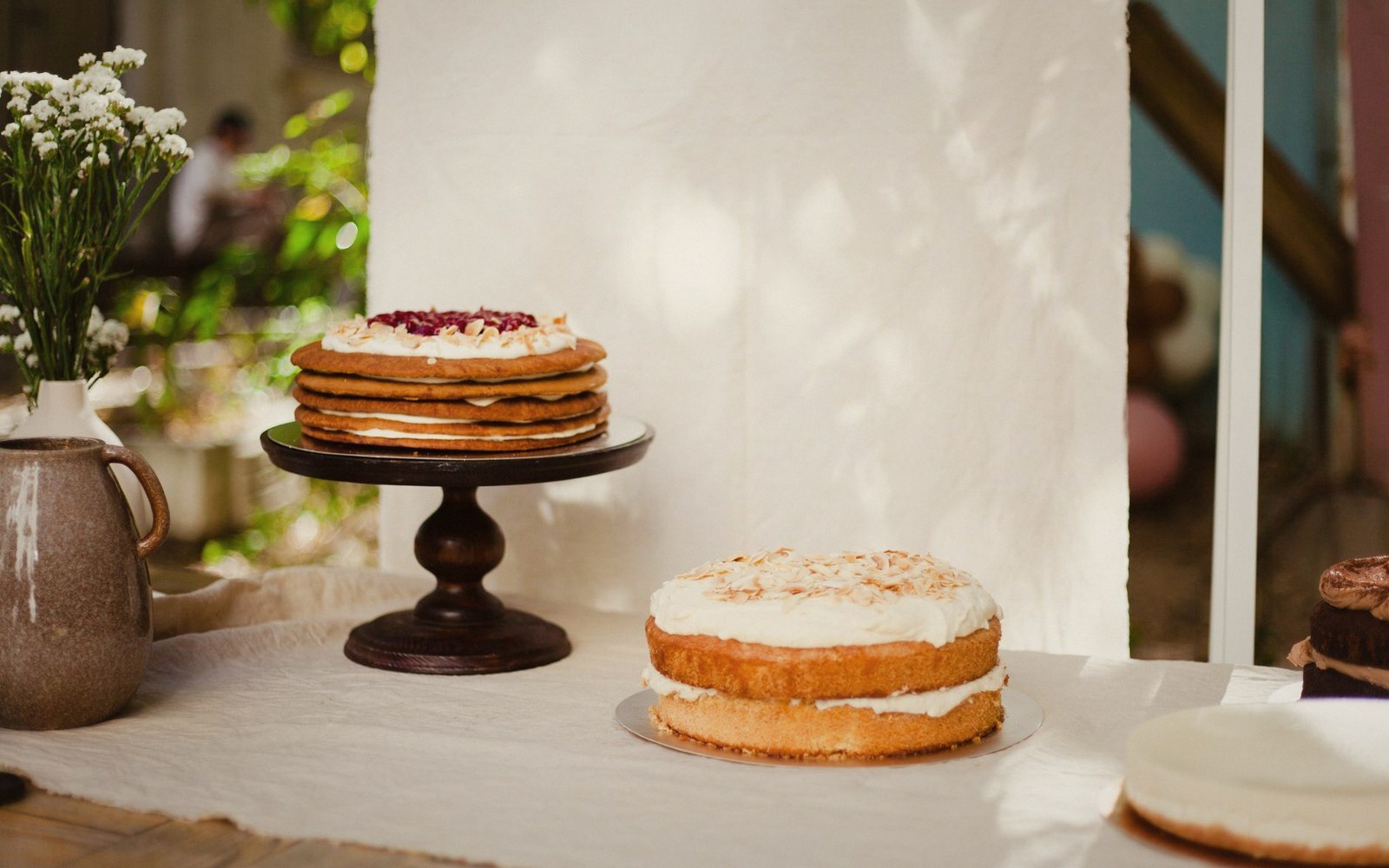
Holding the cake in a cold room until the last possible moment before display is a useful stopgap, but it only delays the encounter with the room, it does not change the room. The physics are fixed. The baker knows them. The venue, often, does not.