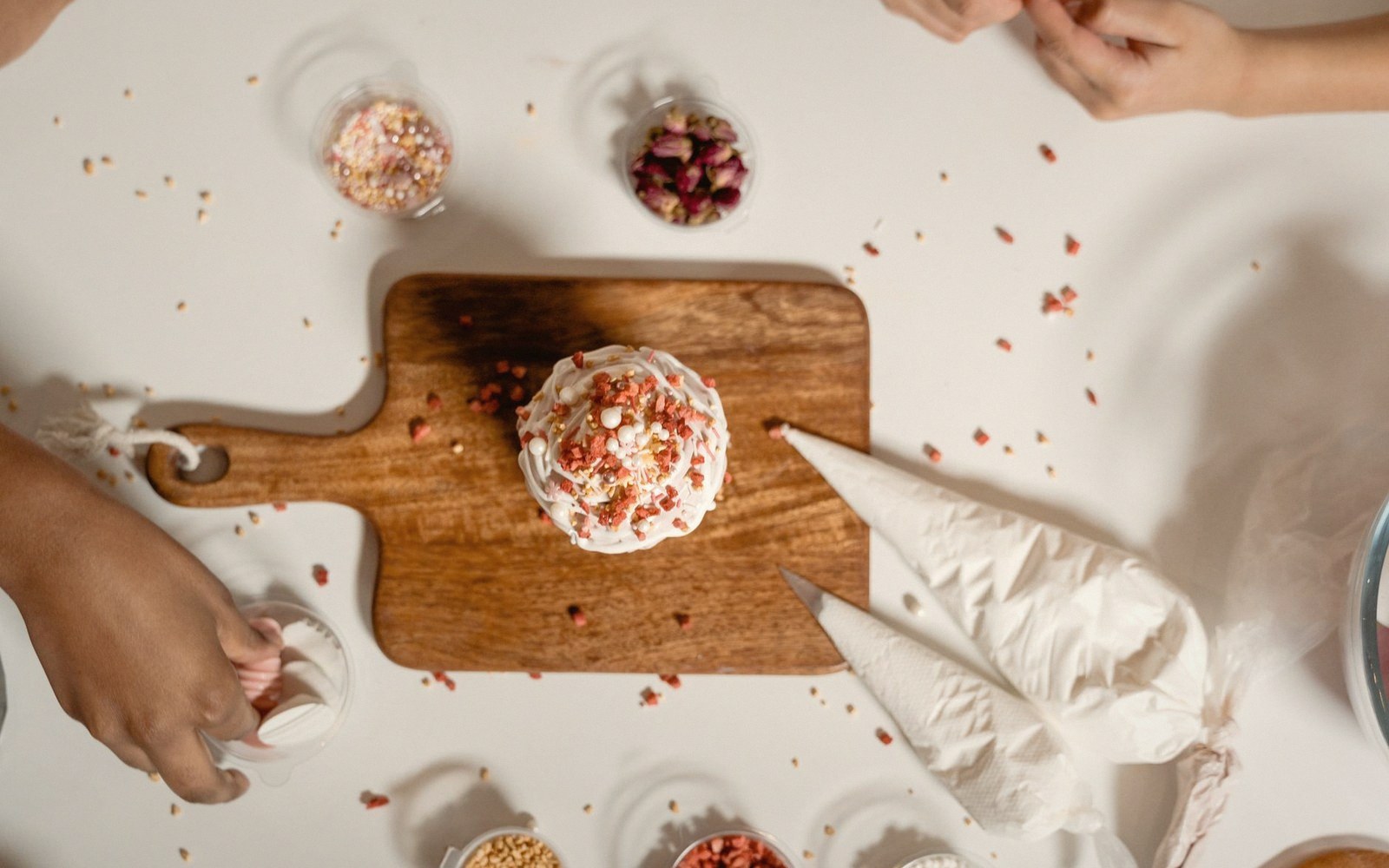
The engineering inside a tiered cake
A tiered cake looks like a confection. It is, underneath the fondant and the flowers, a load-bearing structure — and if the engineering is wrong, the structure fails in full view of a room full of people.
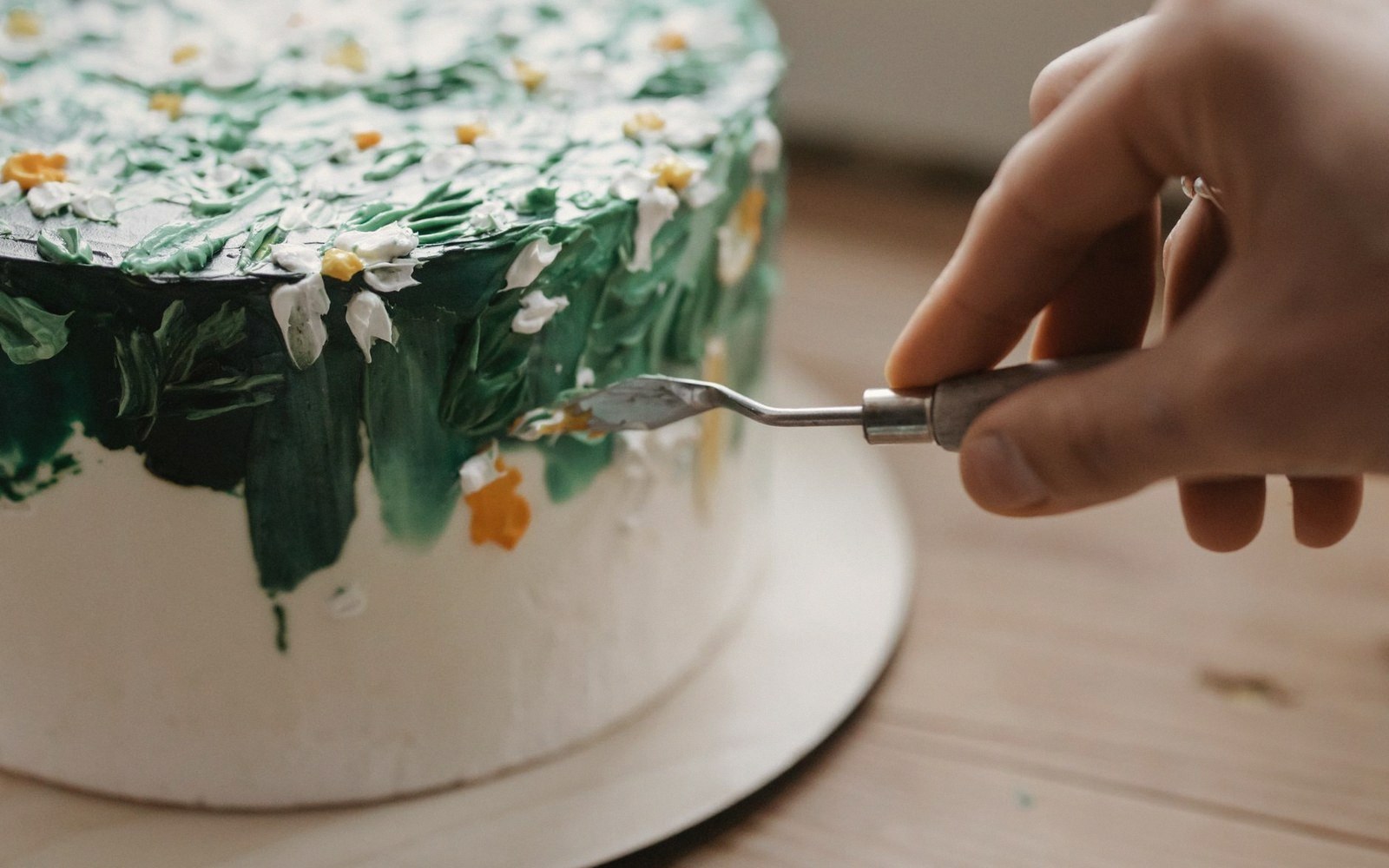
The problem is straightforward: cake is not rigid. Sponge compresses under weight; a buttercream or ganache layer deforms under sustained load, especially as a warm room raises the temperature inside the stack. Stack three or four tiers without any internal support and the bottom tier slowly collapses inward, dragging the whole assembly with it. The solution is the same one used in construction: transfer the load to something that will not compress.
That something is a wooden or plastic dowel. The baker drives a set of dowels vertically into each load-bearing tier — typically four or more arranged in a tight ring just inside the footprint of the tier above. Each dowel is cut flush with the surface of the cake, so that together they form a level platform. Then a thin board — usually food-safe MDF or foamboard, cut to match the diameter of the tier sitting on top — rests across those cut dowel-tops. The tier above never actually touches the cake below. Its weight travels down through the board, into the dowels, and from there straight into the cake board or drum at the base of each tier. The cake is load-neutral; it is the skeleton that takes the stress.
Getting the dowels truly plumb and truly level matters more than it might seem. A dowel that leans a few degrees transfers its load off-centre; over a long reception, the whole stack can develop a lean that looks dramatic and ends badly. Some bakers use a long skewer as a guide and measure each dowel against it before cutting. Others work with a short spirit level laid across the tops once all the dowels in a set are in. The margin for error is smaller than the margin for taste.
The boards themselves have their own logic. A separator board should match the diameter of the tier it supports — sized generously enough to span all the dowels beneath it, but not so wide it appears at the edge of the cake. Boards that are too thin flex; the load concentrates at the dowel-tips rather than distributing across the board's area, and the cake covering can crack from underneath. Bakers often double up boards for heavy tiers, or use rigid acrylic, which adds very little height and does not warp in humidity.
The number of dowels per tier rises with diameter. A small four-inch tier may need no internal support at all — it is simply placed on its board and left. A twelve-inch bottom tier carrying considerable weight above it might take six or more dowels arranged in two concentric rings, with a central dowel driven through the entire stack for insurance. This central skewer — usually a length of food-grade rod — is the structural spine: if a board shifts or a dowel slips, the spike keeps the tiers roughly aligned while someone finds a solution.
Assembly always happens in a specific order: base drum down, bottom tier in place, dowels in and cut, board placed, next tier centred over the dowels and set down level, then the sequence repeats. Some bakers assemble at the venue to reduce transit risk; others build on a purpose-made travel board and secure the stack with that central rod before the van moves. Neither approach is universal, but neither is casual. The physics of the thing does not change because the decoration is beautiful.
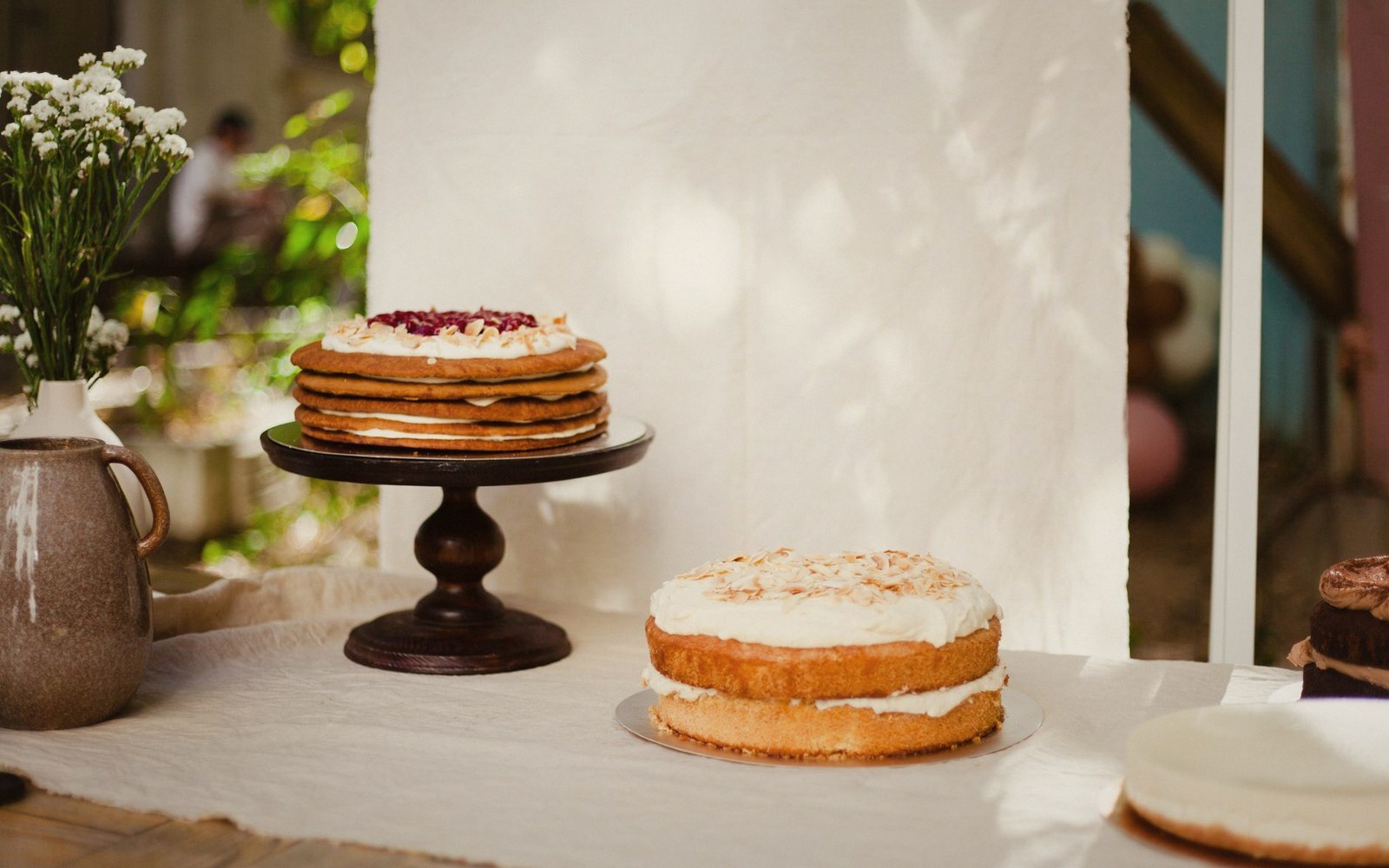
What a guest sees is ribboned tiers rising above a table. What holds them there is hidden — boards of pressed fibre, lengths of plastic rod, a geometry of load and counter-load that the sugar flowers and the frosting were applied over last of all, once the structure was sound.