The Logic of the Hold
Large-scale catering for a fixed event — a wedding, a gala, a banquet — runs on a fundamentally different logic from restaurant service. A restaurant kitchen sends food to order, plate by plate, adjusting temperature and timing continuously. At a wedding reception, every plate goes out within a narrow window, often ten to fifteen minutes for a room of a hundred and fifty or more, and the kitchen has no way to cook everything fresh in that interval. The solution is the hold: food cooked ahead, brought to a precise temperature, held there, then regenerated — brought back to service temperature — at speed.
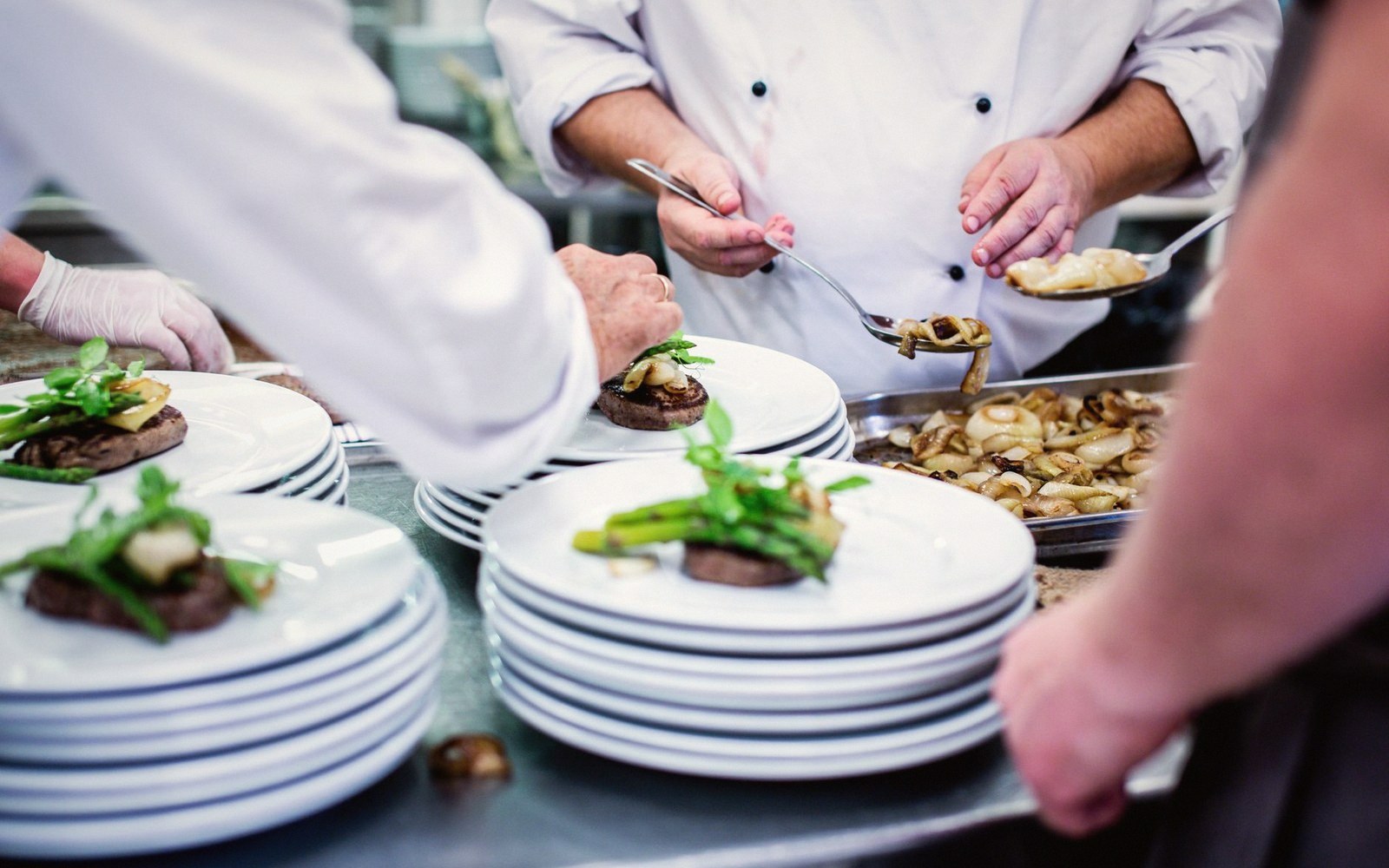
The hold is not an afterthought. It is the architecture of the service. A competent catering kitchen plans its menu backward from the regeneration step, asking first which dishes survive a cold hold and a rapid reheat without loss of texture, colour or structure, and then building the menu from that shortlist.
The list is genuinely short. Braised meats — shoulder, shank, cheek — are the canonical hold dish because braising deliberately breaks down collagen and connective tissue into gelatin, and that gelatin re-melts cleanly on regeneration. The dish is, in a sense, already cooked twice by design. Confit preparations behave similarly. Gratins and baked pasta dishes hold and regenerate well because the starch matrix has already set. Roasted root vegetables tolerate a hold. Fish is far more precarious: it overcooks in seconds and loses texture and moisture through a full regeneration cycle, which is why fish starters are often served cold or at room temperature rather than hot.
What Regeneration Actually Means
Regeneration in a professional context means bringing chilled, fully cooked food from around three degrees Celsius to a core service temperature of at least seventy-five degrees Celsius within a controlled time. The equipment used is typically a convection oven or a combi-oven — a combined convection and steam oven — running at a managed temperature with controlled humidity to limit moisture loss. Steam injection during regeneration is critical for meat: without it, the surface dries and tightens before the core is hot, and the dish reads as overcooked even if the technique that produced it was correct.
Timing the regeneration pass is one of the more demanding calculations in event catering. The oven has a finite capacity; a kitchen serving two hundred covers needs to think in batches and stagger the load so that the first tray out does not sit waiting while the last catches up. Experienced caterers know their oven's real-world capacity — not the manufacturer's stated figure — and build the regeneration schedule around it.
Sauce is almost always held and regenerated separately from protein. A braise, for example, will be portioned with its cooking liquor reduced and strained into a clean sauce, then the two components stored apart and reunited on the plate. This allows the sauce to be brought to a rolling heat on the stovetop at the last moment, which gives it a fresh, glossy appearance, while the protein regenerates in the oven under steam. The plating step — combining them — takes seconds per plate, but those seconds are part of the plan.
Cold-hold dishes must drop from cooking temperature to below five degrees Celsius within a defined window: blast-chilling equipment drives this process quickly, avoiding the danger zone in which bacteria multiply. The blast chiller is not optional kit in professional event catering; it is the device that makes the hold safe rather than merely practical.
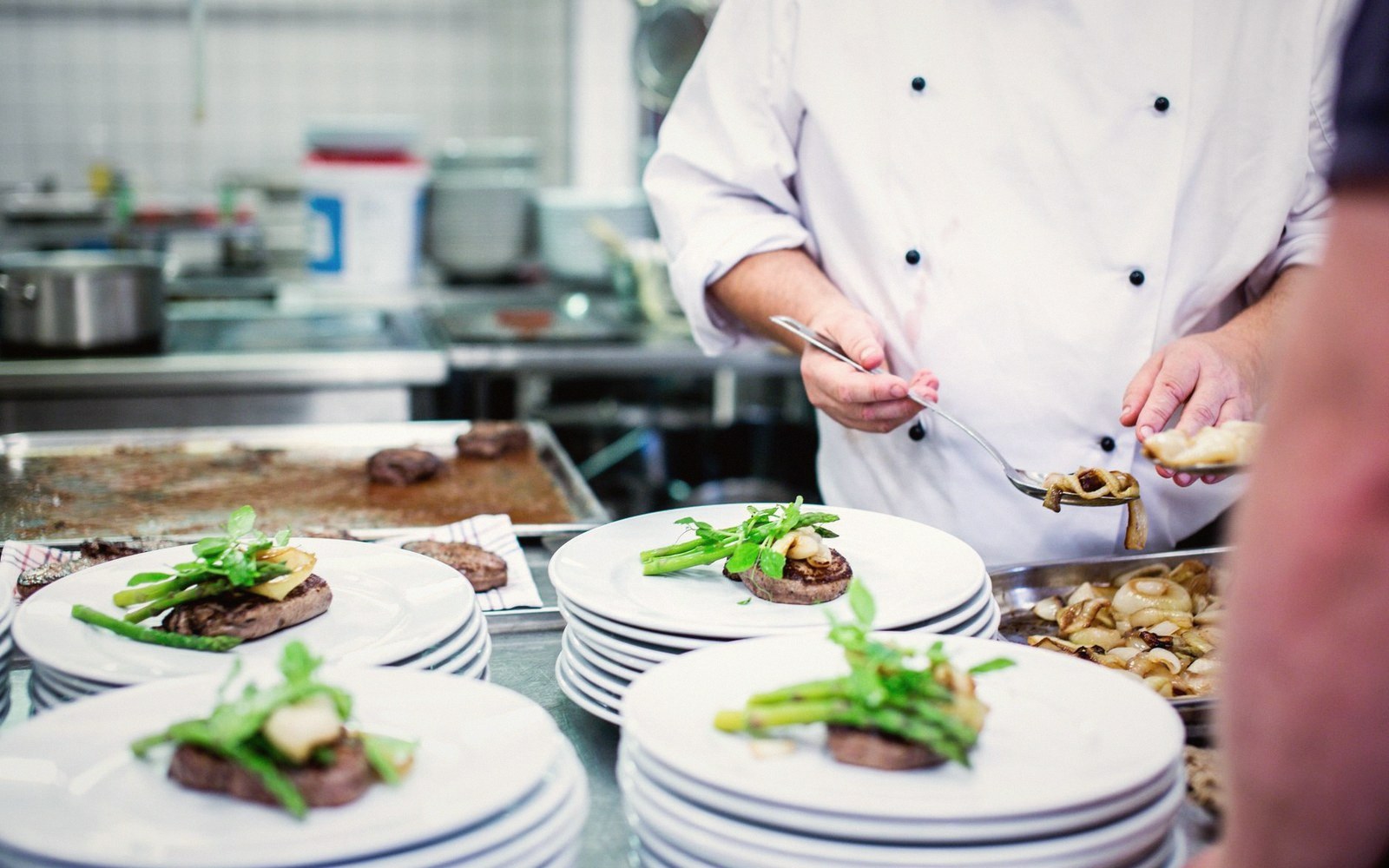
The menus that survive all this gracefully tend to share one quality: they were conceived with regeneration in mind at the very beginning. When a dish is invented in development and the regeneration test is tacked on afterward, it usually fails. The plates that reach a room in good condition are almost always the plates that were designed to make that journey.