
The body is not a fixed thing
A wedding dress is typically cut and sewn across several months, and the body it is being built around is not the same body from one appointment to the next. Weight shifts. Posture changes under stress. Shoulders broaden or drop. The ribcage expands differently at different points in a menstrual cycle. A maker who pretends otherwise is not being kind — they are deferring a problem.
The standard fitting schedule exists to catch these changes at intervals when the work is still correctable. Four fittings is common for a full made-to-measure gown, though the number shifts with the construction: a structured bodice with boning and a built-in corset demands more checkpoints than a slip dress with little internal engineering.
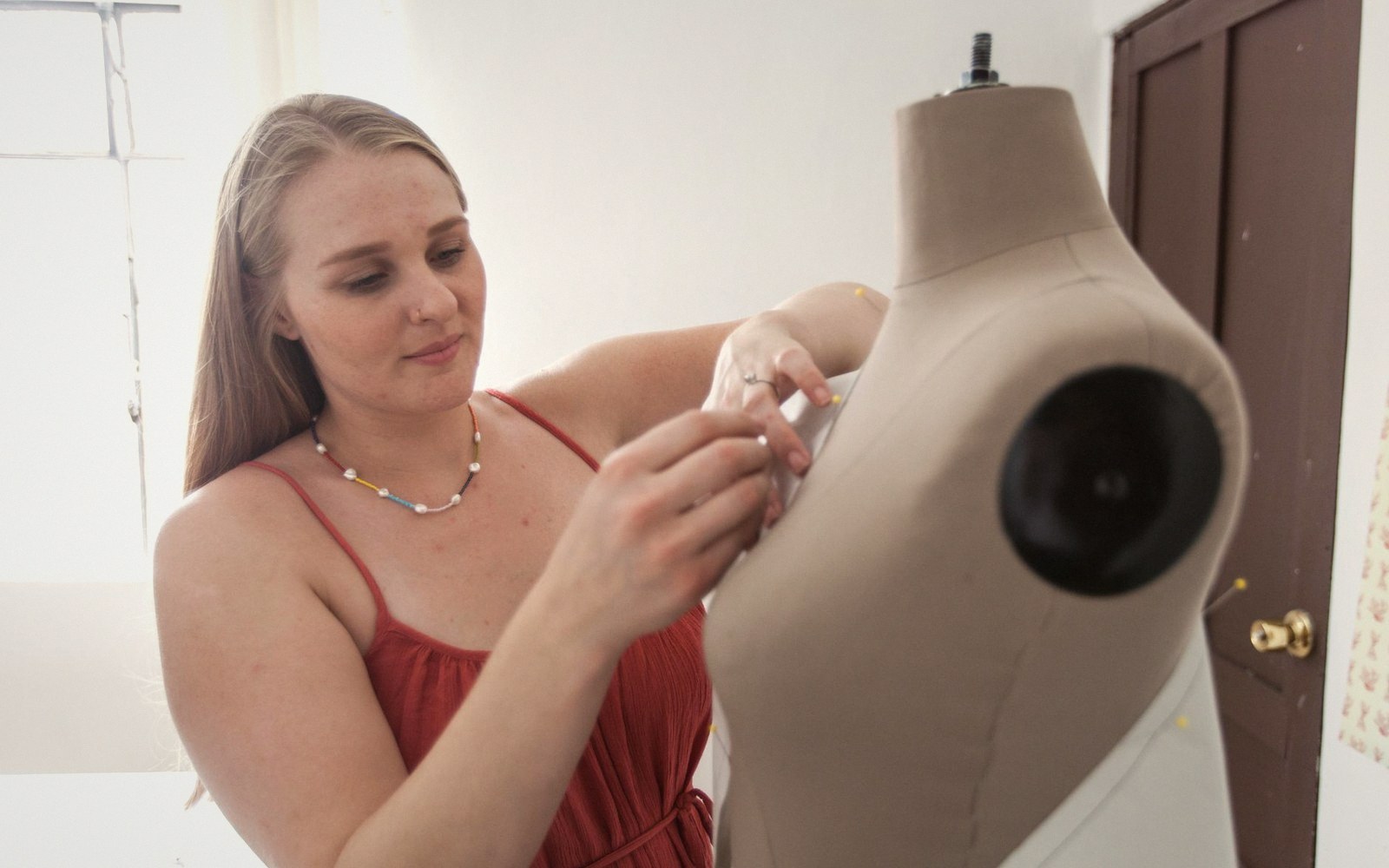
What each fitting is actually for
The first fitting happens after the toile is approved and the dress has been cut in its real fabric but before most of the finishing has been done. The seams are still wide. The hem is pinned, not sewn. This is the structural appointment — the maker is checking that the grain runs true, that the bust point sits correctly, that the zip or lacing line falls where it should. Everything is still reversible, which is the point.
The second fitting catches the consequences of the first. Alterations have been made, and new problems have sometimes been introduced — a side seam taken in can pull the back panel off-grain, or correcting the shoulder slope can shift where the neckline sits. It is also the first time the client is likely to bring her shoes, and heel height changes posture enough to alter where the dress falls across the lower back and where the hem needs to land. What looked level in flat shoes tilts.
The third fitting is where the dress starts to look finished even though it is not. The boning is in, the lining is caught, the hem is basted at working length. This appointment often produces the sharpest emotional reaction — and the sharpest eye. The client can now see what the dress actually is, which means she can see what it is not. Small corrections made here are still manageable. The same corrections raised at a fourth fitting, with the hem hand-stitched and the zip tape sewn in, cost more time than the schedule usually contains.
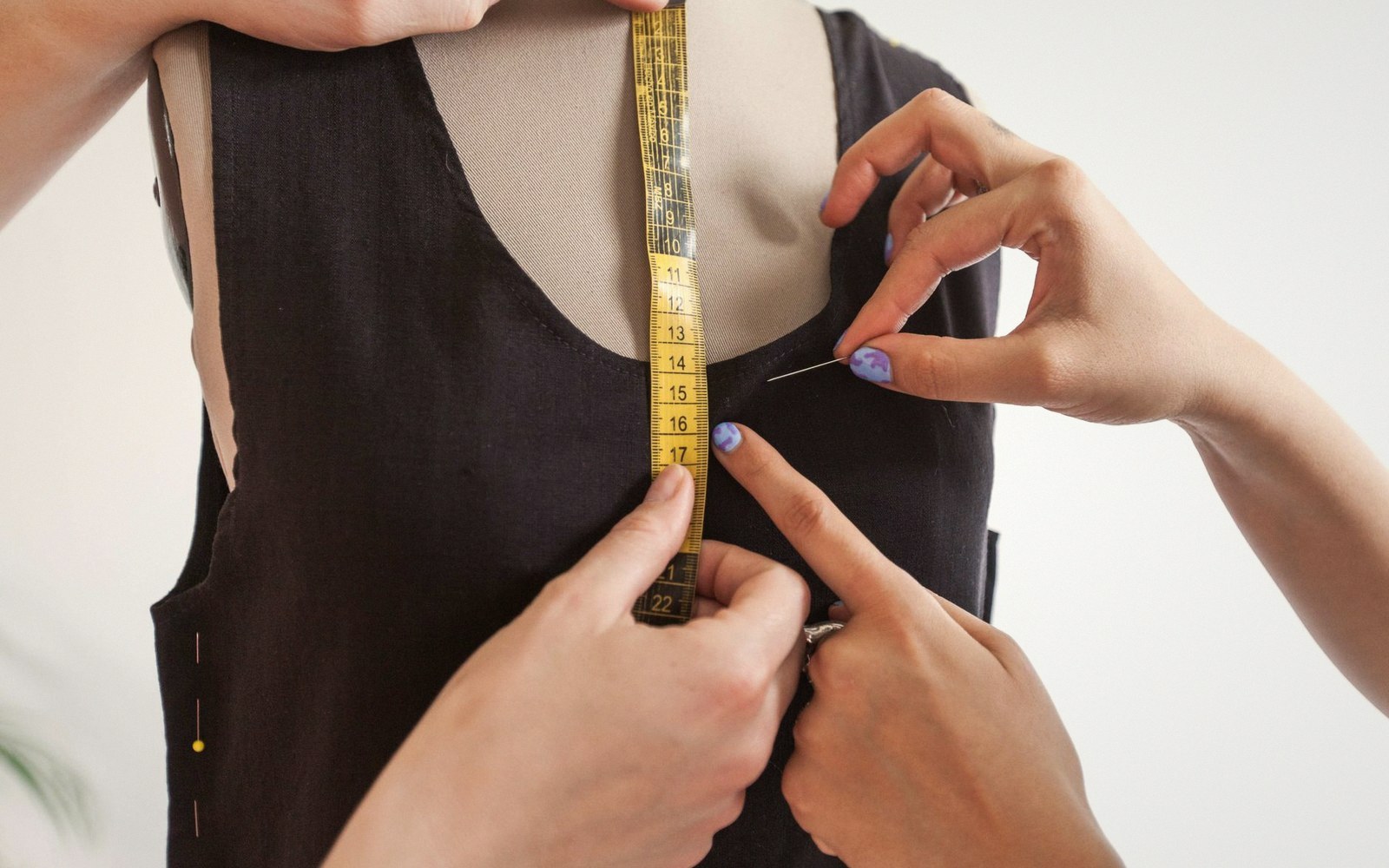
The fourth fitting is the final check before the dress leaves the workroom, and by this point the maker is not expecting to open a seam. She is looking at how the garment moves when the client walks, reaches, sits. She is checking that the boning does not dig at the armhole, that the bustle hooks — if there are any — actually reach each other, that the zip opens and closes without effort and without anyone standing on the train to create purchase. What gets adjusted now is millimetric: a strap shortened by half a centimetre, a hook shifted one position along the tape.
The appointment nobody plans for
Most makers build a fifth, unscheduled appointment into their reality rather than their contract: the final few days before the wedding, when a bride who has been anxious for months and not sleeping well comes in and the dress fits differently again. Stress is not metaphorical — it changes how the body holds itself. Shoulders round. The waist narrows. A dress that was perfectly fitted at the fourth appointment can suddenly gape at the back or catch under the arms.
The makers who have been doing this longest keep the last week deliberately light on other work. Not because they are optimistic, but because they know the fifth fitting is coming whether it is in the diary or not.