A ring is made for a moment; the finger it fits is not
A ring is not fitted to a body the way a dress is — there is no toile, no ease built into the seams, no return visit for adjustments. It is made to a number, and that number is taken at a single point in time, from a body that is quietly in motion all day, every day. That gap between the measurement and the object is where most ring-sizing problems begin.
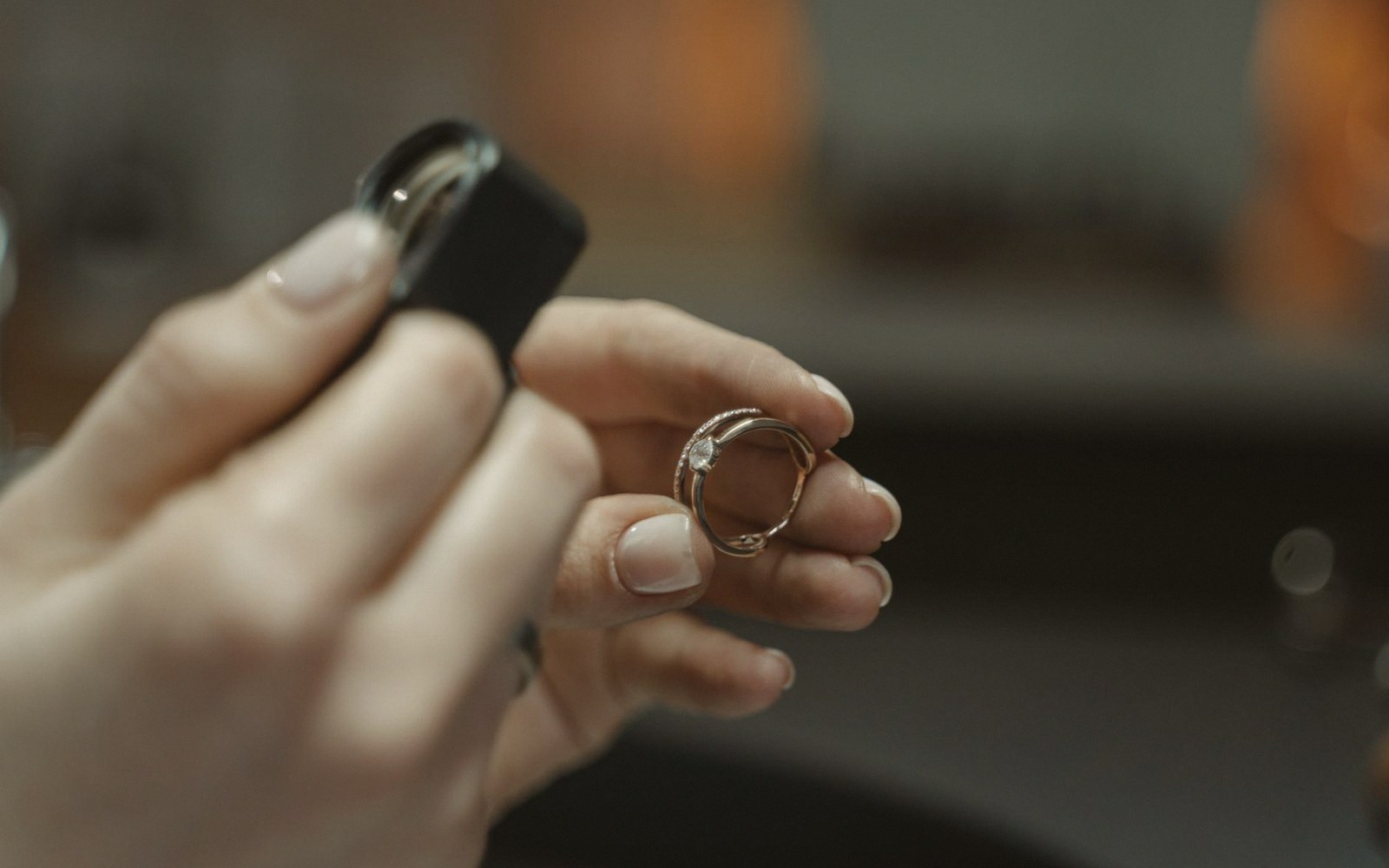
The finger changes size continuously. Heat dilates the blood vessels and the tissue around them; the finger swells. Cold does the opposite — on a winter morning, fingers can be measurably narrower than they are by mid-afternoon. Salt causes retention, so a meal with more sodium than usual will shift the fit for a day or two. Pregnancy, long-haul flights, sustained exercise and even simple sleep deprivation all alter the dimension. The ring, meanwhile, stays exactly the size it left the bench.
How measurement is actually taken
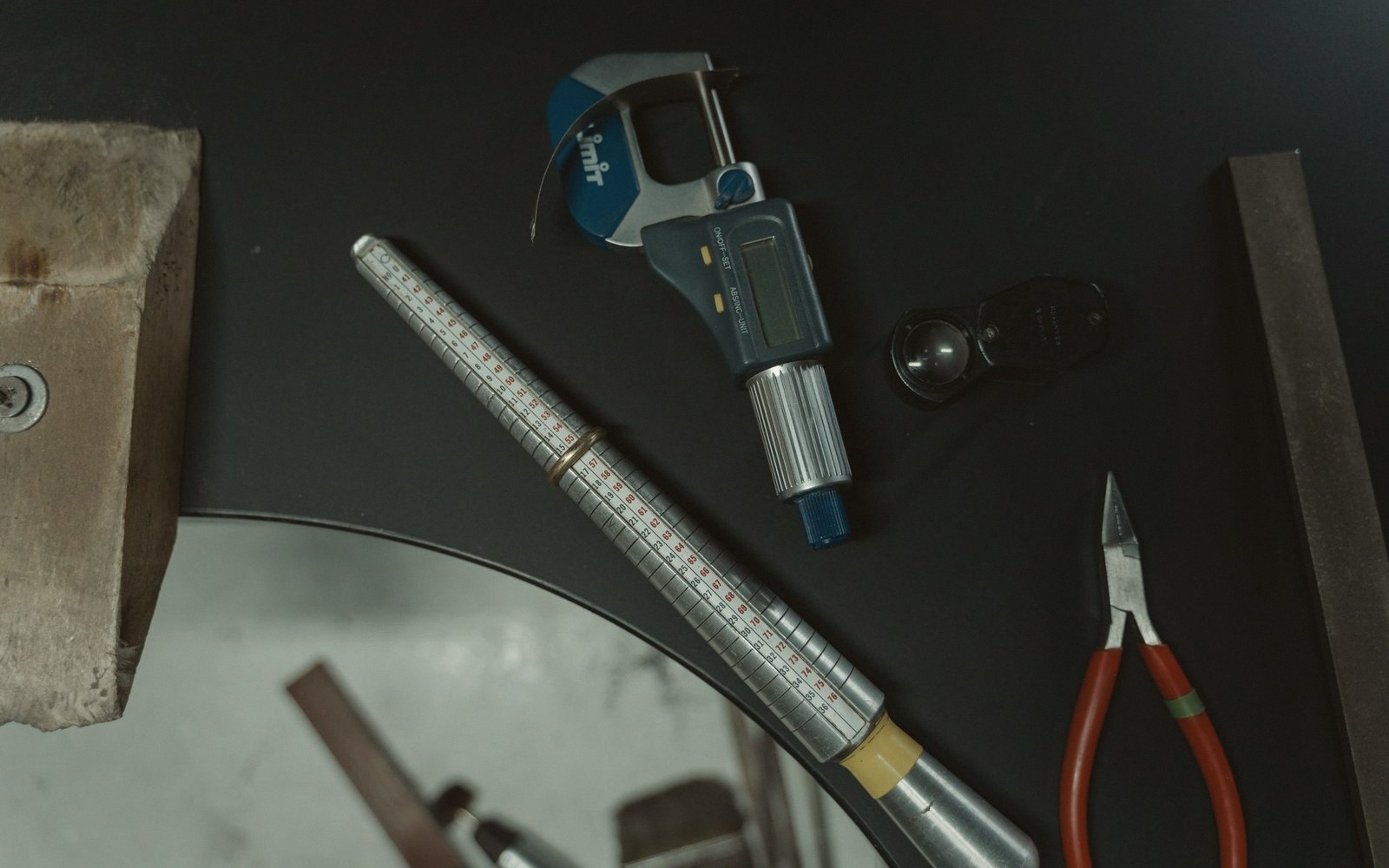
A jeweller measures a finger using a ring gauge — a set of graduated metal rings, each marked to a standardised size. In the UK, ring sizes run alphabetically from A upward; in the US, a numerical scale is used (a UK N, which fits many adult hands, sits around a US 6.5). European sizes work in millimetres of interior circumference. A jeweller working for an international clientele keeps all three systems in mind, because a commission may arrive in one and be sent to a workshop using another, and a conversion error of even one step can mean a ring that won't pass the knuckle.
The gauge tells you the internal diameter and circumference of the finger at the point of measurement. What it cannot tell you is what the finger was doing in the hour before the appointment. Measuring a hand that has just come in from the cold, or has been swimming, or has been driving for two hours with the window down, gives a reading that may be half a size or more off the finger's typical daytime dimension. Experienced jewellers usually ask a client to come in mid-morning, having avoided heavy food and alcohol the night before — not as a formality, but because the reading taken then is more representative than one taken at the day's extremes.
The knuckle complicates this further. On many hands, particularly hands that have done manual work over years or have some joint enlargement, the knuckle is wider than the base of the finger. A ring that passes the knuckle comfortably will then spin and shift; a ring tight enough to sit still will not go on without effort, and certainly not off without more. Jewellers sometimes resolve this with a comfort-fit shank — the inside of the band is domed slightly rather than flat, which reduces the contact area and makes passage over the knuckle marginally easier without changing the seated diameter.
What the maker can and cannot do
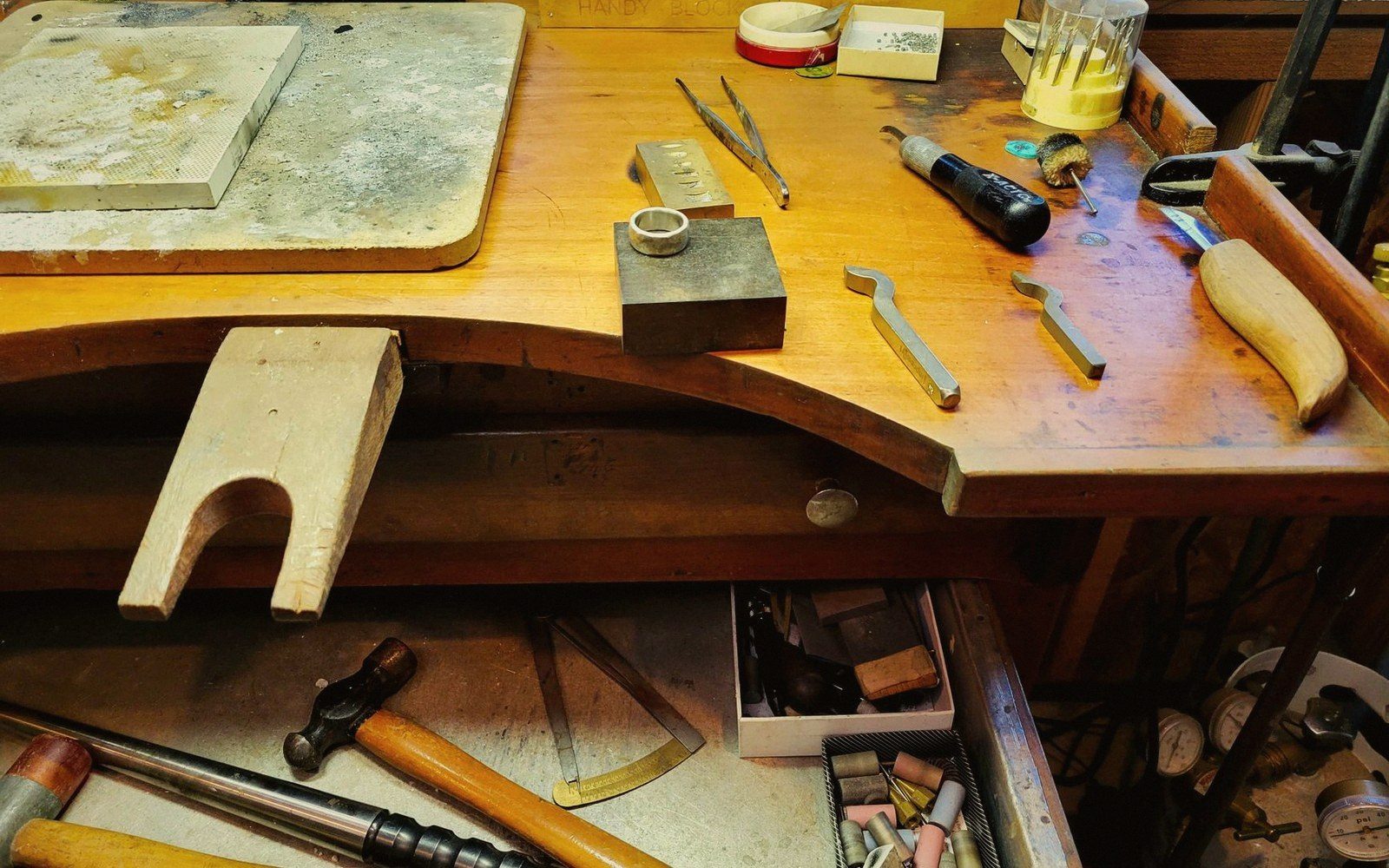
Once a ring is cast, forged or fabricated, resizing is possible within limits. A plain metal band — gold, platinum or silver — can be sized up by cutting the shank and inserting a short additional section of matching metal, then soldering, refining and re-polishing. Sizing down means removing a section, closing the gap and doing the same. Both operations are routine but not invisible: a thoughtful maker leaves the ring's join in the same place throughout so that subsequent sizing works with the structure rather than across a previous repair.
Not every ring can be resized. A channel-set band, where stones run the full circumference, cannot be made larger without breaking the setting. Rings with complex surface patterning on the shank — engraving, milgrain, hand-texture — may not survive the heat or the finishing passes needed to restore the surface after sizing. And platinum, which is worked at temperatures higher than gold and is less forgiving of repeated heat cycles, requires a different set of tools and more time at the bench. Some makers, for this reason, will not size a platinum ring more than one full size in either direction without rebuilding the shank from scratch.
The permanent object, then, is always a best estimate at a moment in time, made with as much care as the measurement allows. The finger keeps changing. What a good maker builds in is a little room for the life that comes after the making — in the fit, in the metal, and in the structure of the join.