The window between bud and blown
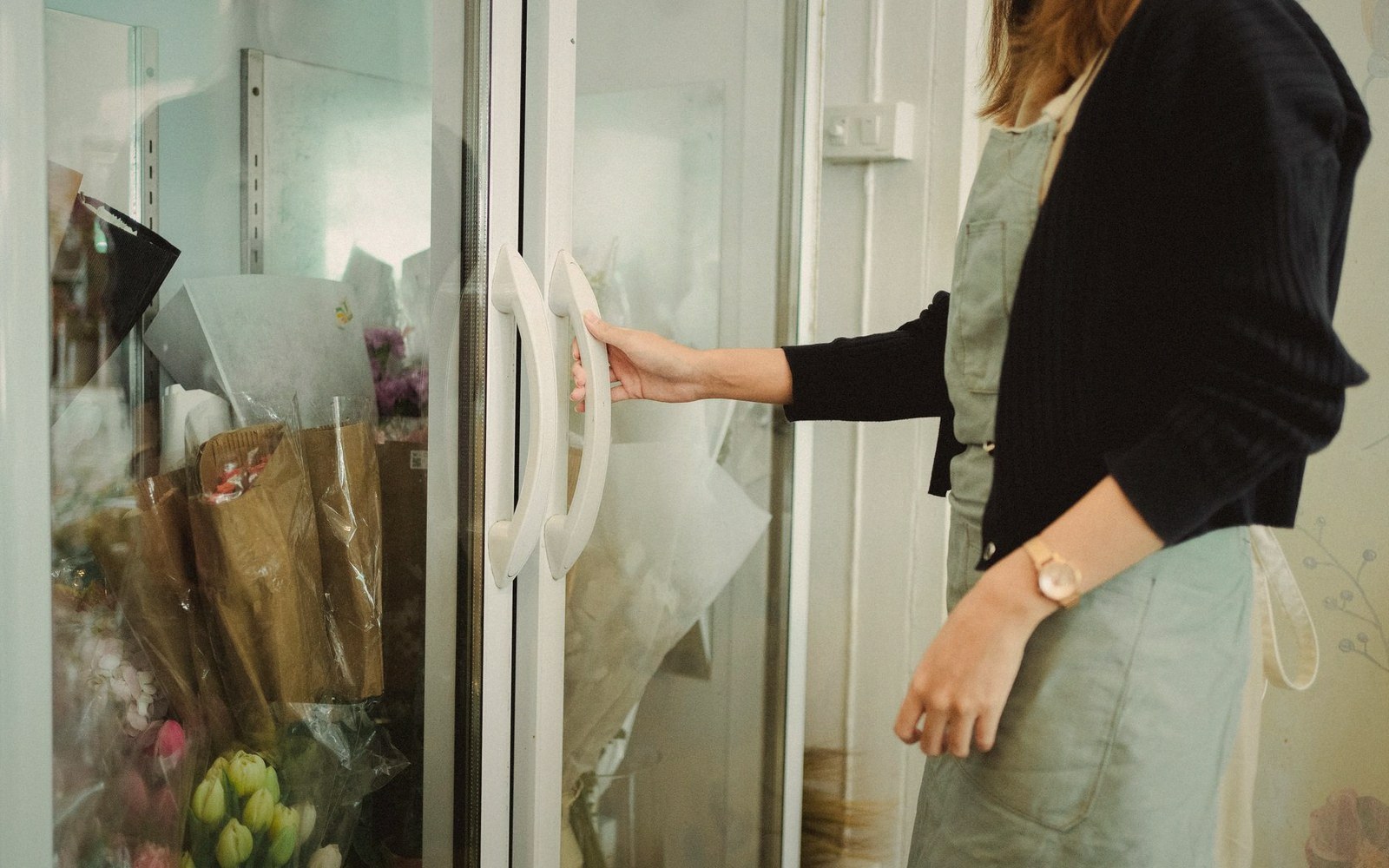
A cut flower is a clock running in one direction. Warmth accelerates it, cold slows it, but nothing stops it — and a florist's entire week is an exercise in managing that rate against a fixed deadline. By the morning of the wedding, roses ordered four or five days earlier at the four o'clock market need to be open enough to show their full face but not so far gone that petals drop at a touch. The cold room is where that calculation is held.

Cold storage for flowers runs between two and four degrees Celsius — cold enough to suppress respiration and slow ethylene production (ethylene being the gas that drives ripening and cell breakdown), but not so cold that water freezes in the stem tissue. A degree or two either way matters: too warm and the room fails its purpose entirely; at or below zero, the cells rupture, and the flower turns glassy and collapses on return to warmth. Florists who share refrigeration with catering — a common situation in smaller operations — have to watch this constantly, because a fridge that dips to accommodate cold cuts will ruin stock overnight.
Humidity matters alongside temperature. Dry cold — the kind that comes from a standard refrigeration unit without humidity management — desiccates petals at the edges. Commercial flower cold rooms circulate moist air, keeping relative humidity high enough that petals do not thin and brown at their margins before the work begins. This is why purpose-built flower storage looks different from a walk-in kitchen fridge even when both read the same temperature on a thermometer.
The deeper complication arrives not in the cold room but at the other end: the venue. Marquee weddings in summer are the worst case. Canvas holds heat, and a marquee without mechanical cooling can reach temperatures that would embarrass a greenhouse by mid-afternoon. Arrangements that were composed in a cool morning workroom and installed before guests arrived can lose an hour or two of their viable life just sitting in that ambient heat. Florists building for warm venues often hold back the most delicate elements — open garden roses, sweet peas, anything with a papery petal — until the last possible moment before the room fills. The structural pieces go in first; the perishable ones follow.
The cold room does not solve that final hour. It only buys the time to get there.