The work begins before the card is opened
An invitation arrives as an object before it arrives as a message. The envelope is the whole of that first impression: its weight in the hand, the texture under the fingertip, the way the address sits on the face. A letterpress card inside a limp machine-printed envelope is a contradiction, and experienced stationers treat the envelope as a continuation of the job, not its packaging.

Envelopes for formal stationery are almost always lined — a second sheet of paper bonded to the inside, often in a contrasting colour or printed pattern, visible the moment the flap is opened. The lining does structural work too, stiffening the envelope so it holds its shape through the post.
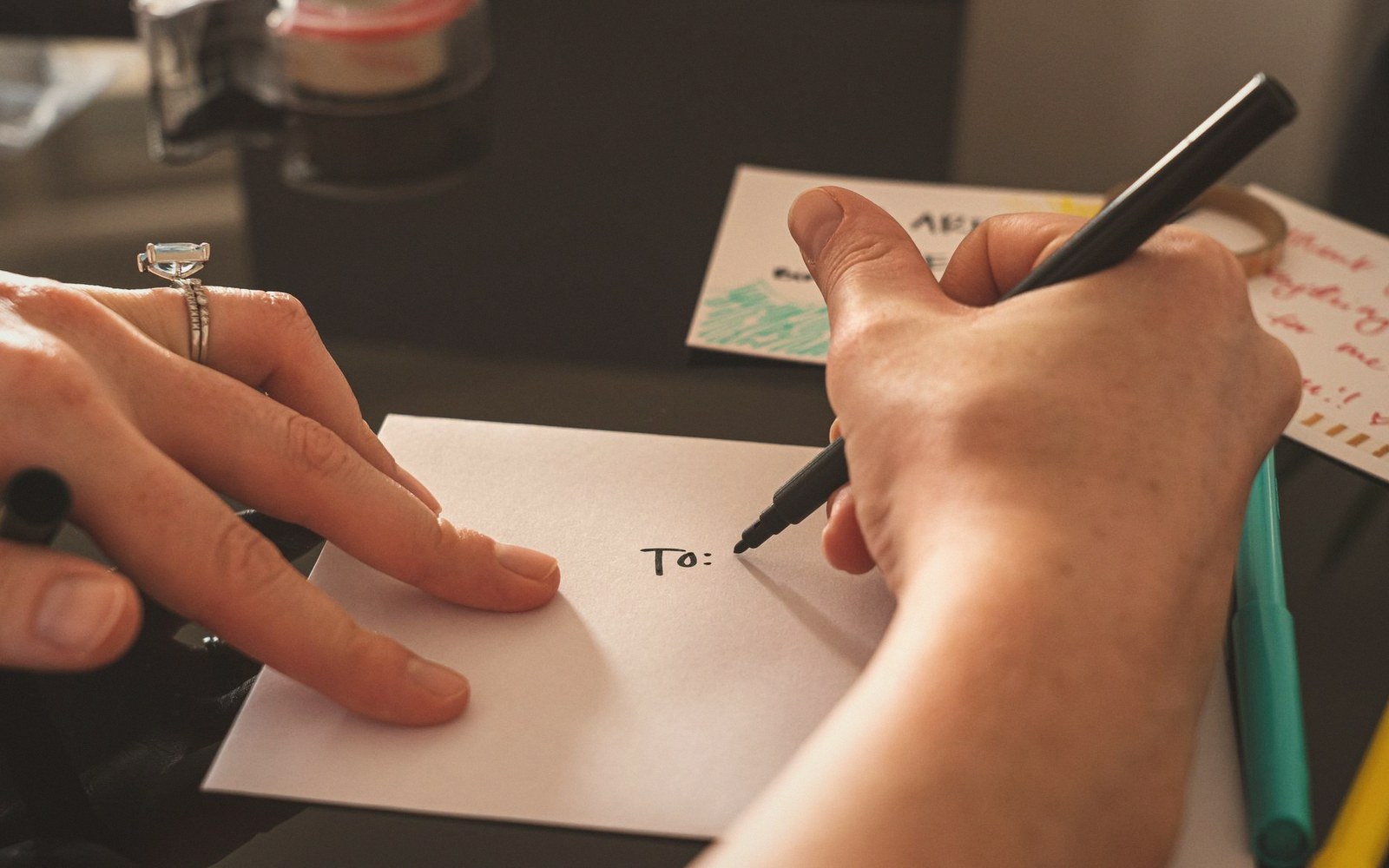
The address is, in most workshops, still written by hand. A calligrapher works from a final guest list supplied late — addresses change, names are corrected, plus-ones are confirmed — and the addressing is often the last task to be completed before the job ships. The ink used matters: certain inks bleed slightly on coated paper, others sit proud and sharp. The choice of nib determines the thick-and-thin contrast of the letterforms, and consistency across a hundred or two hundred envelopes requires the calligrapher to work in a single sustained session rather than returning across several days, because the hand warms up and the style drifts.
Stationers offering a full envelope service will often stock two sizes: an outer mailing envelope, plain and practical, and an inner envelope that carries only the names — no address, no stamp — which is sealed or simply tucked. The inner envelope is the one that bears the calligraphy; the outer is destroyed on arrival. It is an old convention, built around the era of household staff who received deliveries at the door, but it persists because it protects the calligraphed surface through transit.
Postage is its own calculation. A heavily lined envelope, a thick card, and any enclosures — reply card, map, tissue interleaf — can take the package beyond standard letter weight, and a returned-to-sender result after all that work is the kind of failure that lives long in a workroom's memory. Weight is checked on a postal scale before anything is sealed, and the final stamp is chosen with the same attention as the rest: a commemorative issue rather than a printed barcode label, whenever the postal service makes one available.