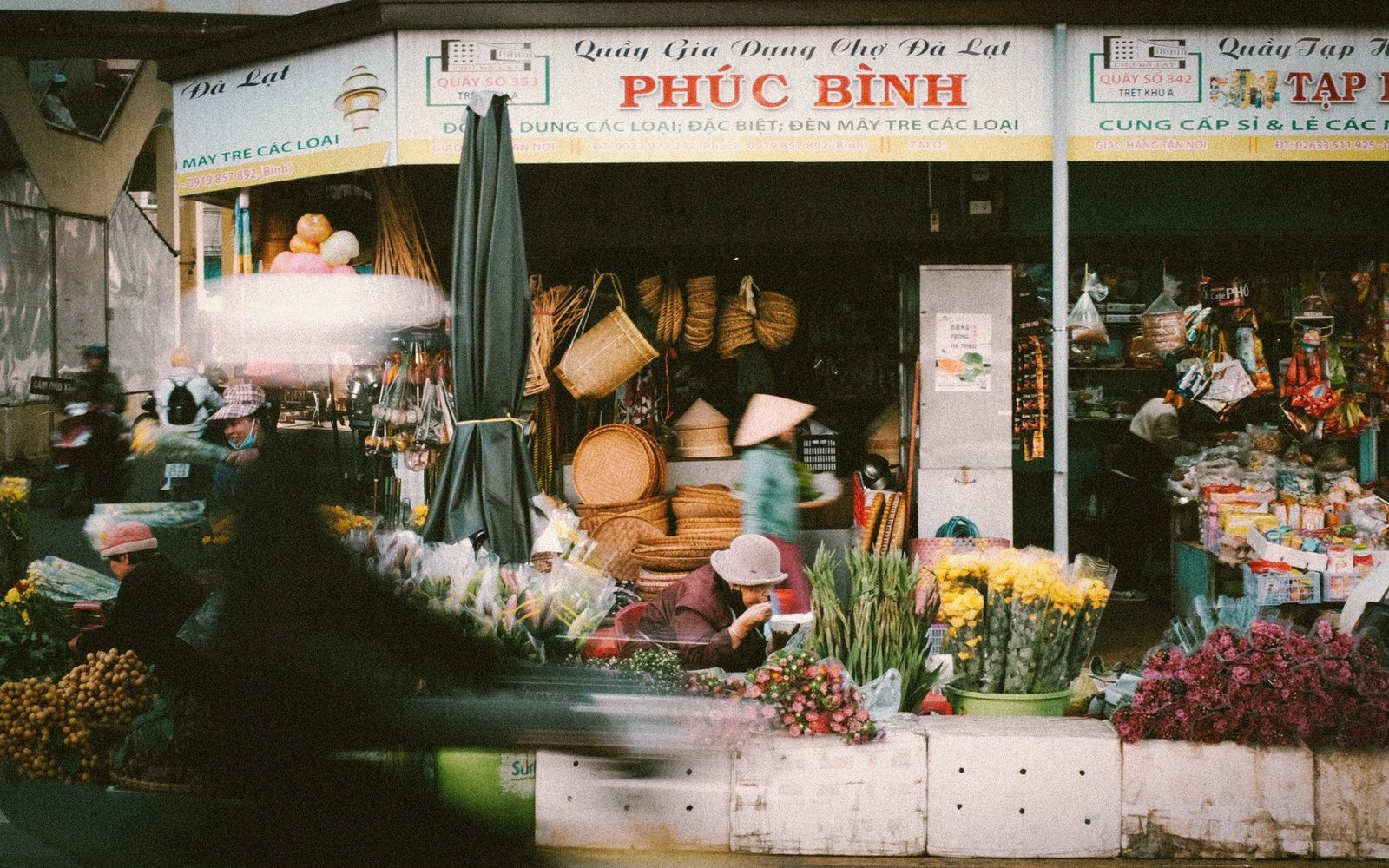
The market
The alarm goes at three. By four, the wholesale flower market is already busy — not loud, but dense with purpose: trolleys threading between long steel tables, auction clocks ticking down in seconds, buyers with clipboards making decisions at speed. Most of the world's major wholesale cut-flower auctions run on Dutch-clock format, meaning prices descend rather than climb. A hand shoots out to stop the clock. Too early and you've overpaid; too late and the lot is gone. In the Netherlands, the market at Aalsmeer — Royal FloraHolland, the world's largest flower auction — handles millions of stems on any given trading morning, moving flowers from growers in Kenya, Ecuador, Colombia and the Netherlands itself through the auction floor and into refrigerated transport within hours of the opening bell. London's New Covent Garden Market operates on a direct-purchase model rather than auction, but the four-in-the-morning logic is the same: you are there before the city wakes because the flowers need every hour you can give them.
A florist buying for a wedding is not buying at peak bloom. That is the whole point. The buyer walks the market looking for buds — roses that are shut tight, peonies still showing only the first blush of open, sweet peas barely uncurled. A flower bought in full bloom on a Tuesday will be finished by Saturday. The skill at the market is reading a stem's potential: judging from petal firmness, sepal position and the resistance of a bud pressed lightly between finger and thumb how many days of development are left, and whether that trajectory lands on the right afternoon.
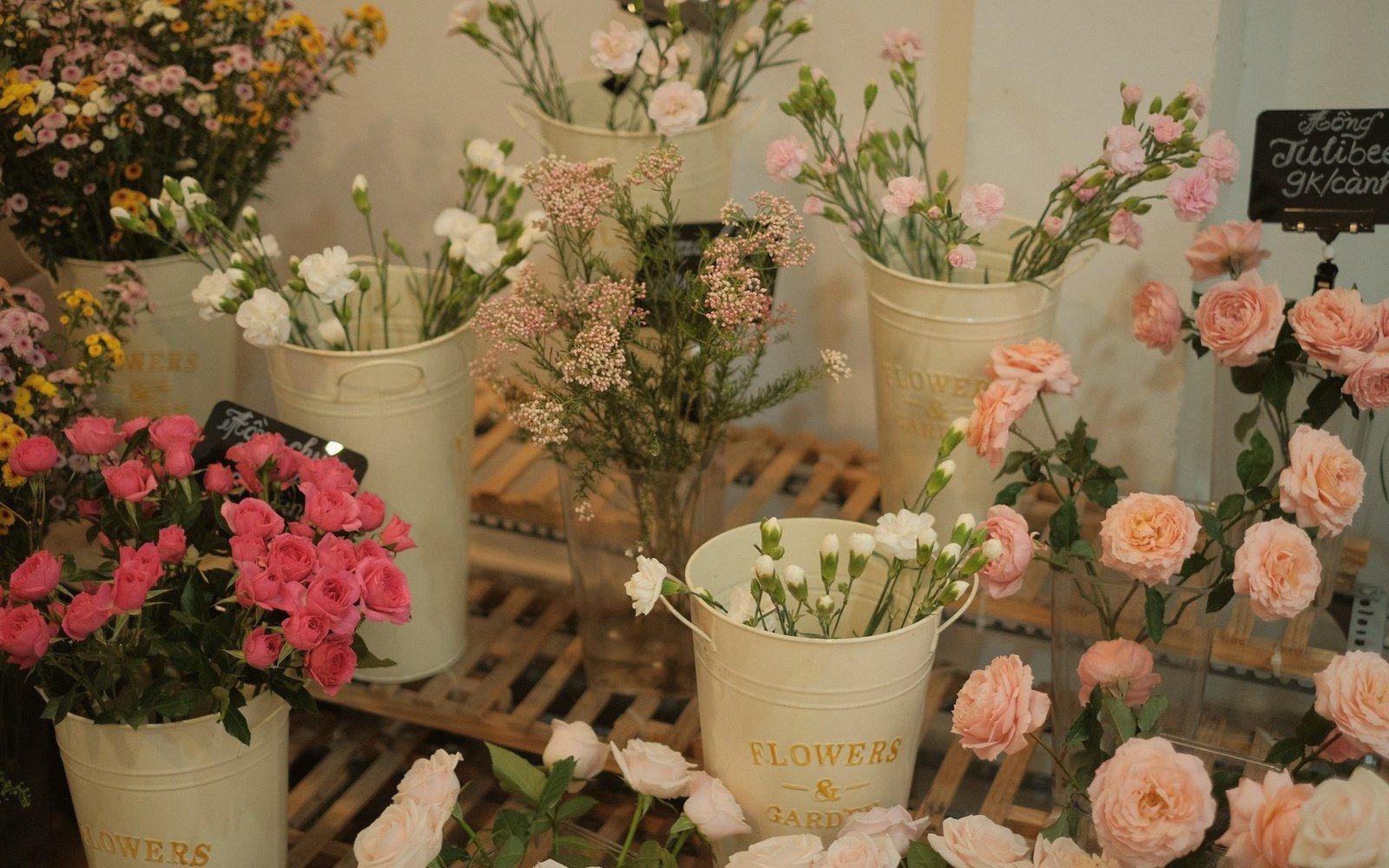
Colour is harder in market light than it sounds. Sodium-vapor and fluorescent tubes flatten and shift hues. A cream rose can look white; a blush can read peach; a lilac can look grey. Experienced buyers compensate by holding stems near a window or a daylight lamp, or simply by knowing a grower's stock well enough to trust it. Working with the same growers across seasons is not sentimentality — it is data. You know how their 'Juliet' roses open, how quickly their Café au Lait dahlias move through their colour register from pale ochre to deep rust.
Conditioning
The flowers leave the market in buckets, never dry. Dry stems in warm air are the fastest way to waste a morning's spend. From the market, everything goes into the cold room — but not immediately into arranged form, and not before a critical preparation step.
Conditioning starts with a clean, angled cut made under water. The reason is straightforward: when a stem is cut in air, it draws air into its vascular tissue before water can follow; that air embolism slows uptake for hours. Cut under water, and the stem draws liquid from the first moment. The angle matters too — a flat cut sits flush against the bucket base and restricts flow; a forty-five-degree cut keeps the channel open. Woody stems — lilac, viburnum, eucalyptus — are often additionally scored or lightly crushed at the base to increase surface area. Foliage that would sit below the waterline is stripped entirely, because submerged leaves rot and that rot contaminates the water and, with it, every stem in the bucket.
Then comes the cold room. The temperature held there — typically between two and five degrees Celsius — suspends development. A peony in a cold room does not open. It waits. This is the florist's primary tool: not hurrying the flower, but pausing it, and releasing it into warmth at a calculated moment. The timing of that release depends on the flower species, the ambient temperature of the venue, and the time of day the arrangement needs to be complete. A peony moved from the cold room to a warm workroom twelve hours before the ceremony will be further along than one moved four hours before. Getting that calculation wrong in either direction produces flowers that are either still clenched or already browning at the edges.
Water quality matters throughout. Hard tap water can interfere with uptake; some florists use filtered water or add small quantities of flower-food compounds — typically containing a sugar, a biocide and an acidifier — that lower pH and keep bacterial load down. The sugar feeds the flower; the biocide suppresses the bacteria that would otherwise colonise the bucket and block the stem ends; the acidifier mimics the slightly acidic conditions in which many cut flowers take up water most efficiently.
The arrangement is the quick part
There is a workroom assumption that arrangement is the main event. In practice, it is the short event. A skilled florist's hands move fast — stems are assessed, cut to length, placed. The spiral-bound technique used in hand-tied bouquets, where each stem crosses the previous at a consistent angle to form a self-supporting structure, takes perhaps fifteen minutes of active construction once the material is ready. Table arrangements in vessels are faster still. The hours that precede those fifteen minutes are not glamorous: they are filled with stripping, cutting, bucket management and vigilance over the cold room.
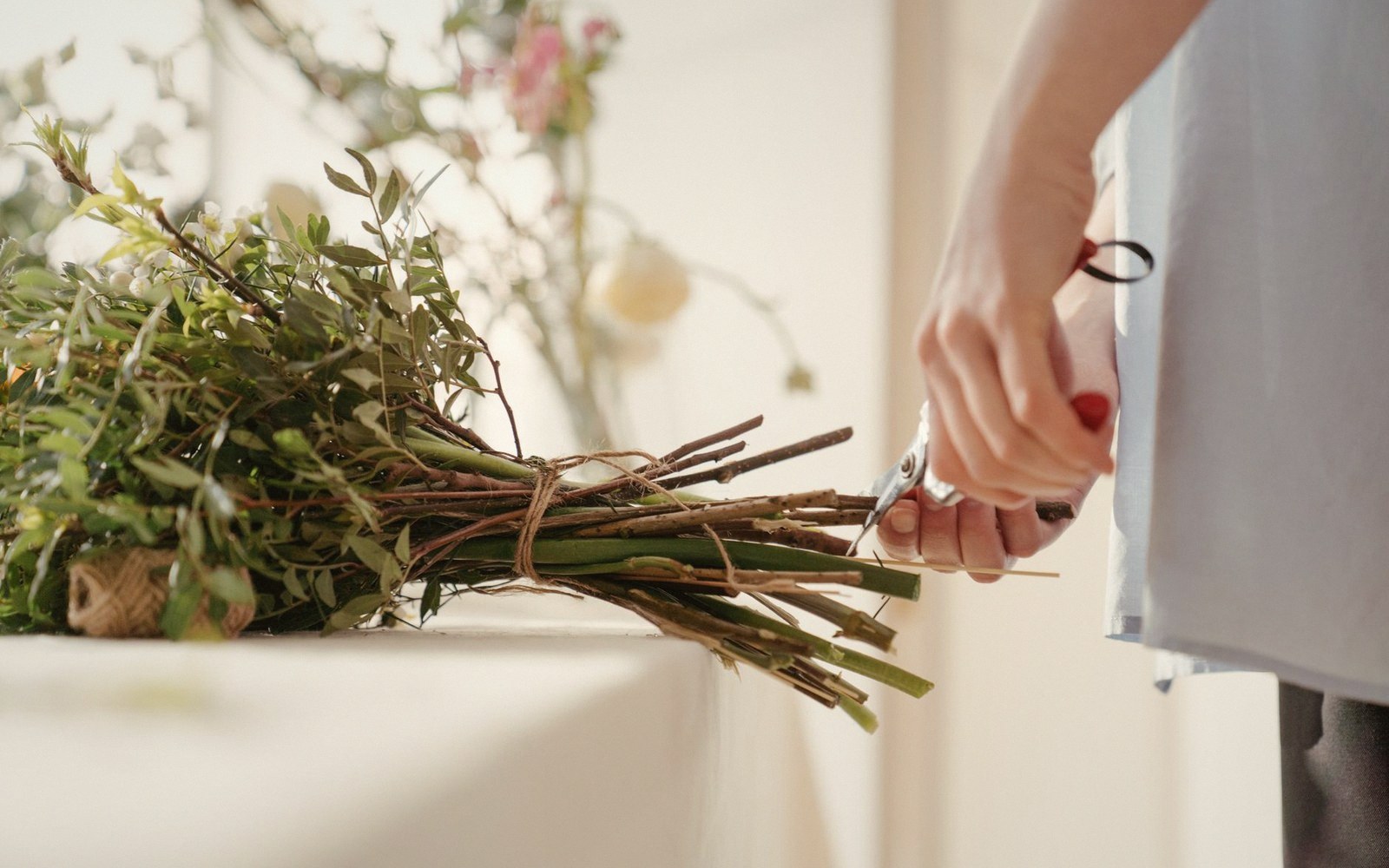
The cold room's function on the day itself is to hold finished arrangements at peak rather than let them drift forward. An arrangement completed in the morning and left at room temperature through a long afternoon will have visibly aged by the time it reaches the room. Held cold, it is released into the venue as close to the moment of use as possible — often just an hour or two before guests arrive. The mechanics of that release — how arrangements are transported, kept upright, protected from wind — are an extension of the same logic: a flower is alive, and everything between the cold room and the table is a negotiation with time.
The thing that separates good floristry from adequate floristry is rarely visible in the finished arrangement. It lives in the buying decision made at four in the morning, in the angle of the cut made under water, in how well a florist reads the cold room's role not as storage but as timing. When an arrangement looks inevitable — as if the flowers arrived exactly like that, at exactly the right moment — it is because someone was at the market in the dark three days earlier, pressing buds between finger and thumb and calculating forward to a single afternoon.