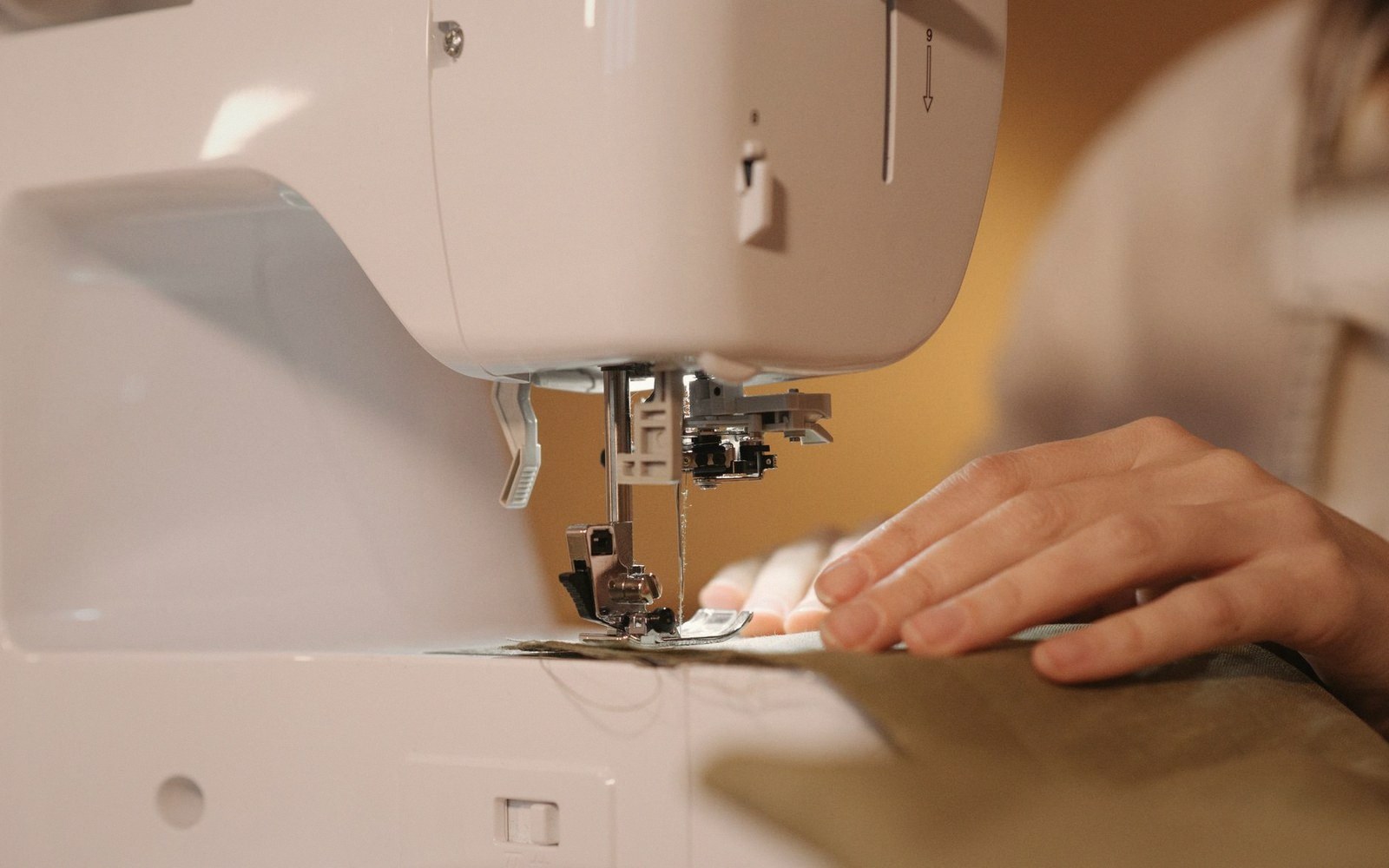
The problem with a machine
A sewing machine drives thread from two directions simultaneously — one spool above the fabric, one bobbin below — locking them together inside the fabric. On a trouser leg or a linen shirt, that knot on the underside is irrelevant. On a wedding dress, the hem is the surface the eye follows across an entire room. A machined catch-stitch, however fine, leaves a dimple on the face of the fabric wherever needle and thread pulled tight, and under the raking light of a reception hall that dimple becomes a row of dots, regular as a telegraph. So the machine is put away.
The hand-finish used on most bridal hems is the slip stitch — a stitch that travels almost entirely inside the fold of the fabric and surfaces on the fashion side only for a thread-width before diving back in. Done correctly, it is effectively invisible from the front and holds the hem allowance flat against the body of the skirt without distorting either layer. The tension is the skill: too tight and the face fabric draws; too loose and the hem drops at the first wearing.
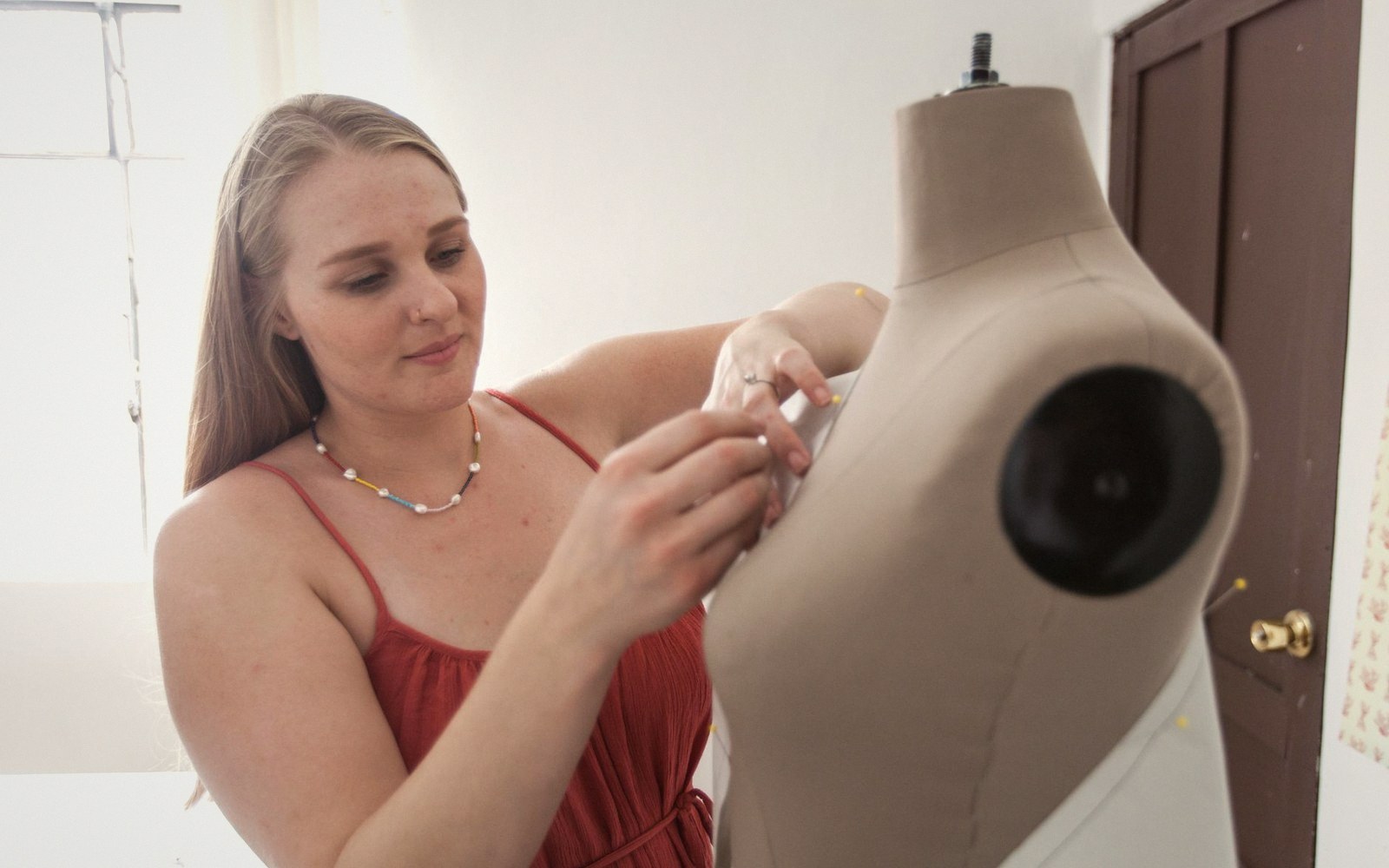
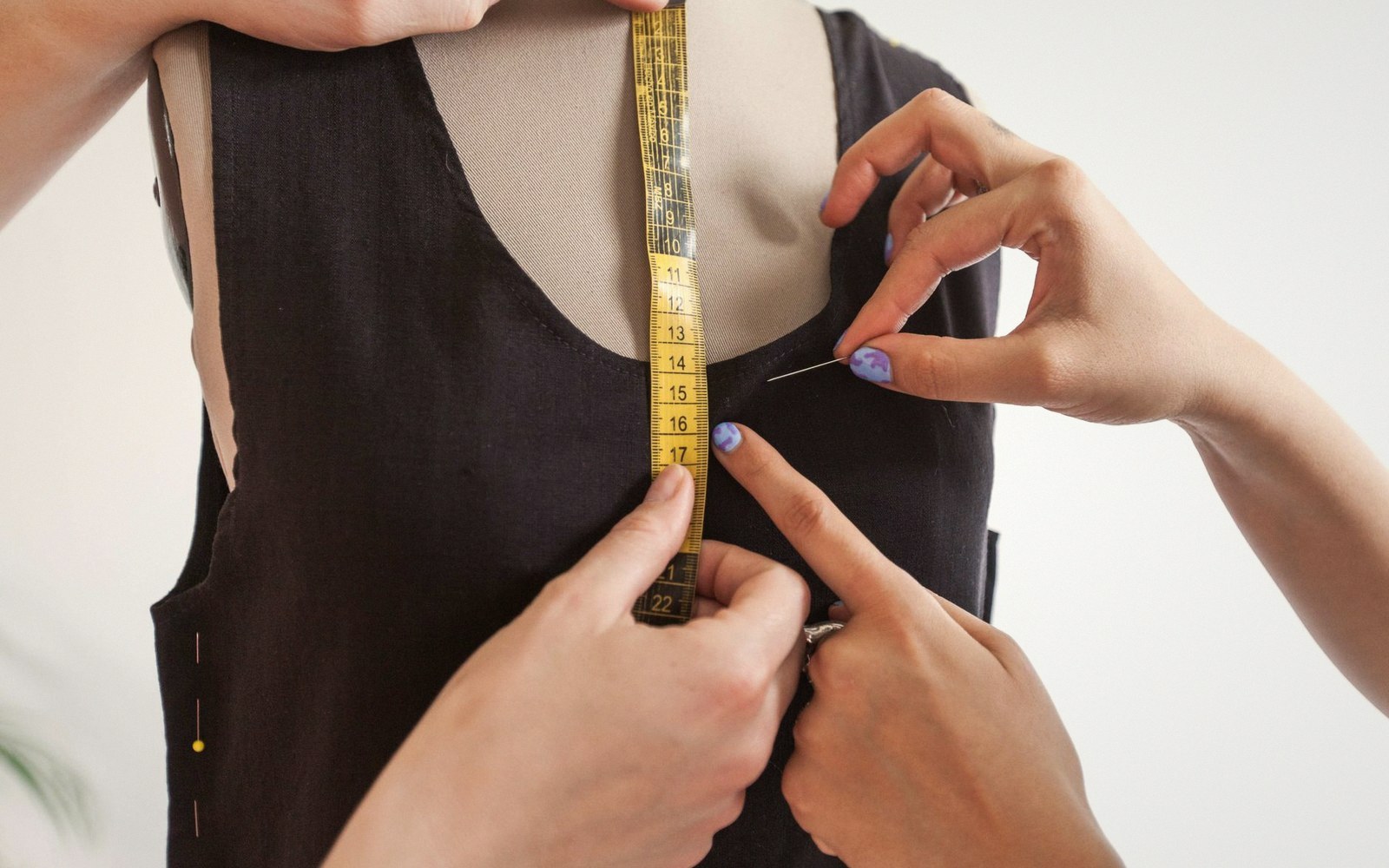
Before any stitching begins, the hem allowance has to be prepared. On straight skirts, that means pressing the fold crisp with an iron and a damp cloth. On anything cut on the bias or in a circle — the shapes that give a skirt its movement — the curved edge wants to ripple and must first be stay-stitched and eased, sometimes left to hang overnight so gravity can settle the grain before the seamstress marks the finished level. Marking is done with the dress on the body or, for the first pass, on a dress form adjusted to the wearer's measurements and heel height, using tailor's chalk or pins at measured intervals from the floor. The accuracy of that chalk line is the foundation everything else rests on; an uneven hem cannot be rescued at the stitching stage.
Certain fabrics complicate every step. Silk charmeuse is slippery enough that the hem allowance shifts under the needle regardless of how many pins hold it. Heavy duchess satin has enough body to hold a fold but enough weight to pull the stitching if the hem band is too narrow. Tulle is not hemmed in the conventional sense at all — it is cut, because tulle has no tendency to fray and a folded edge would add bulk to something valued precisely for its weightlessness.
The whole process on a full-skirted gown might take an afternoon. The dress will be worn for a day.