A garment made to be wrong
A toile is a full-scale working model of a dress, sewn in cheap fabric — usually a plain calico or cotton muslin — before a single expensive yard of the real cloth is cut. It looks like a dress, it goes on the body like a dress, and then it gets taken apart like a puzzle someone is trying to understand from the inside.

The word is French — toile simply means cloth — and in dressmaking it has come to mean this specific, disposable version: not a sample, not a mock-up in the loose sense, but a complete garment whose only purpose is to reveal what the pattern got wrong. Every correction marked on it in pen or chalk is information that feeds back into the paper draft. The real dress is built from what the toile got wrong.
The logic is purely economic, though not only in the obvious way. The most immediate saving is material: a bolt of silk duchess satin, heavy silk organza, or a couture-weight wool crepe represents both serious money and a fabric that will not forgive a seam ripped and resewn three times. Calico costs a fraction of any of these and has roughly similar body. But the economy runs deeper than that. A pattern drafted flat onto paper — however carefully — is a two-dimensional description of a three-dimensional body, and no two bodies agree with their own measurements in quite the same way. One person's 34-inch bust sits high; another's sits low. A dropped shoulder reads differently on a narrow frame. The only way to learn what the pattern is actually saying is to put it on the body it was made for.
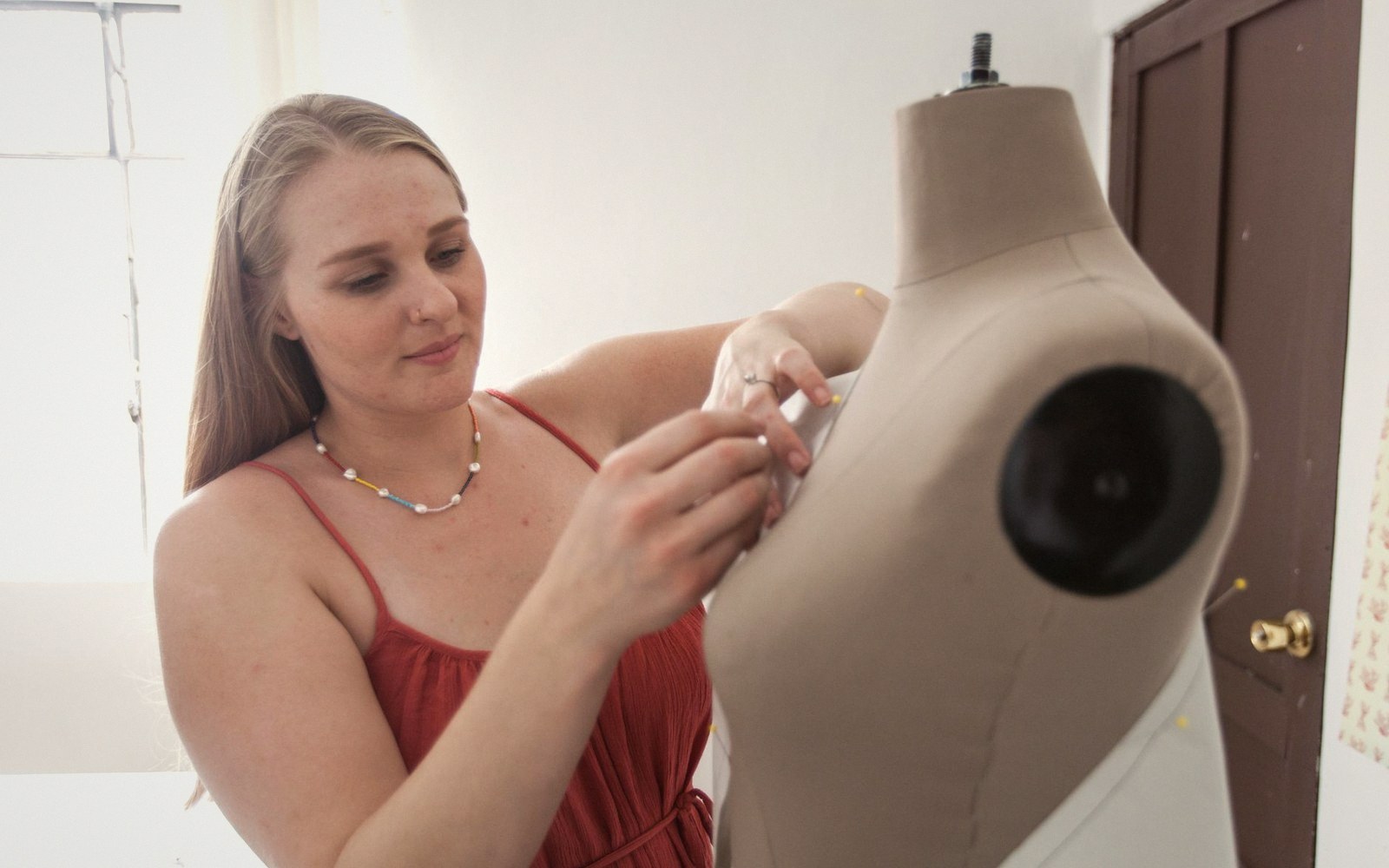
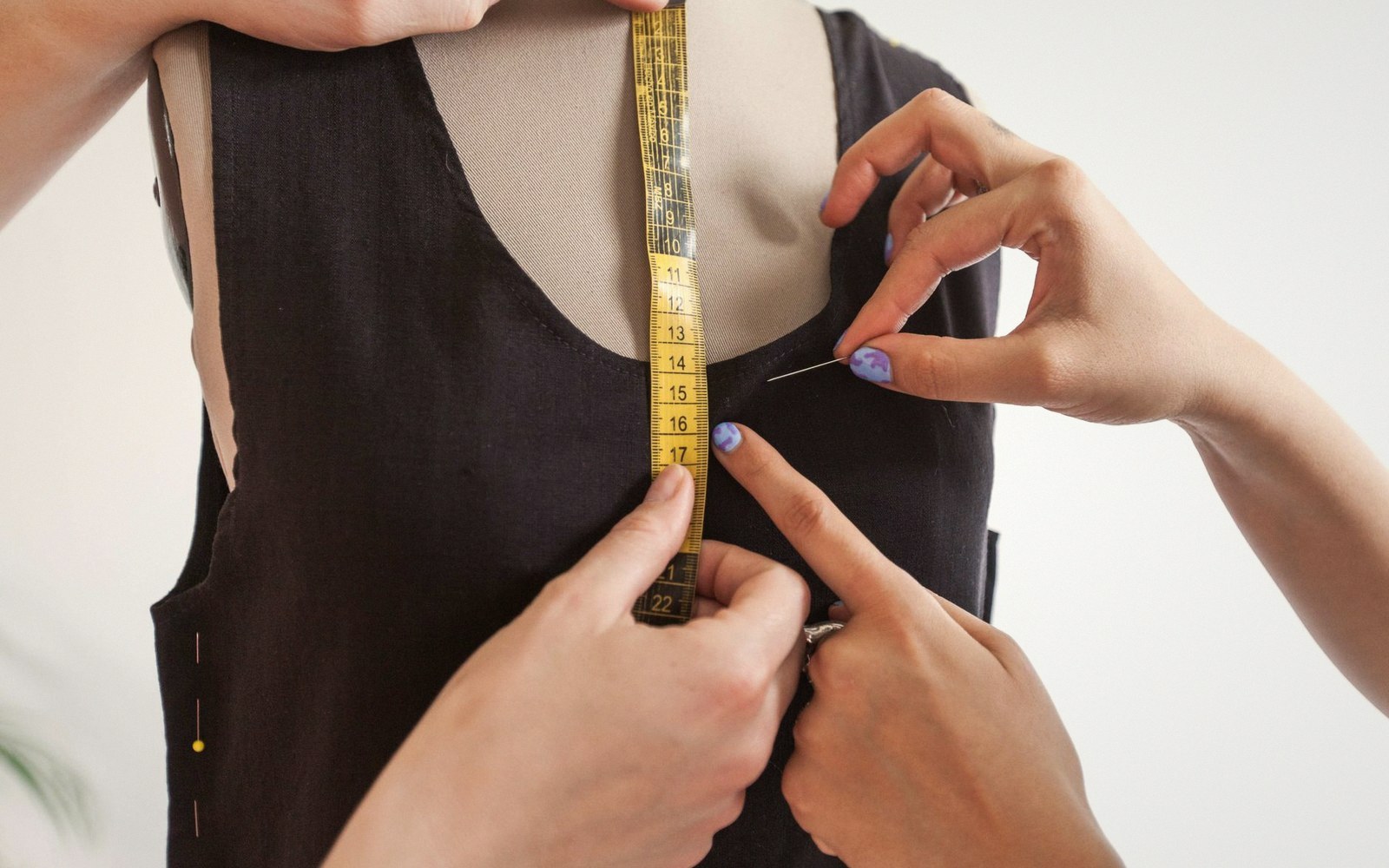
So the maker cuts the calico to the pattern, sews it up with long machine stitches or even hand-basting — anything quick and reversible — and brings the client in for what is effectively a diagnostic appointment. The toile goes on, and the work begins at once. A seam that pulls across the back is let out and repinned. A neckline that gaps is taken in. The dart that looked right on paper falls half an inch below where the bust actually is, and so it is slashed open, repositioned and pinned again. Every adjustment is marked directly on the fabric with a pen, because the fabric is where the true information lives.
Some corrections are simple transpositions — the dart moves half an inch, the shoulder seam shifts — but others require the maker to understand why the pattern drifted, not just where. A skirt that swings to one side under normal fitting conditions may indicate uneven hip height. An armhole that cuts into the underarm often reflects a back width too narrow for the actual shoulder blade movement of that particular person. The toile makes these structural problems visible in a way that a tape measure laid over a body never quite does.
When every correction has been marked, the toile comes off the body and is taken apart at the seams. The pieces become the corrected pattern: they are either traced onto fresh pattern paper or the pieces themselves are adjusted and used directly. In some workrooms, particularly those working in a French haute couture tradition, a second toile is made to check the corrections before cutting the fashion fabric. In others — especially for a less structurally complex garment — one round of toile-making is enough, and the corrected draft goes straight to the real cloth.
What the toile cannot replicate is the behaviour of the actual fabric. A heavy duchess satin hangs with more authority than calico; a bias-cut silk charmeuse will slip and stretch in ways no cotton mock-up predicts. Experienced makers know this, and they account for it when they read the toile — mentally adjusting for the drape and give of what will eventually replace it. The toile is not the answer. It is the question asked in the right language, specific enough that the answer becomes possible.
By the time the real cloth is unrolled on the cutting table, the pattern beneath it has already been on the body. Not in silk, not in the dress that will be worn, but close enough to have told the maker what they needed to know before anything irreplaceable was touched.