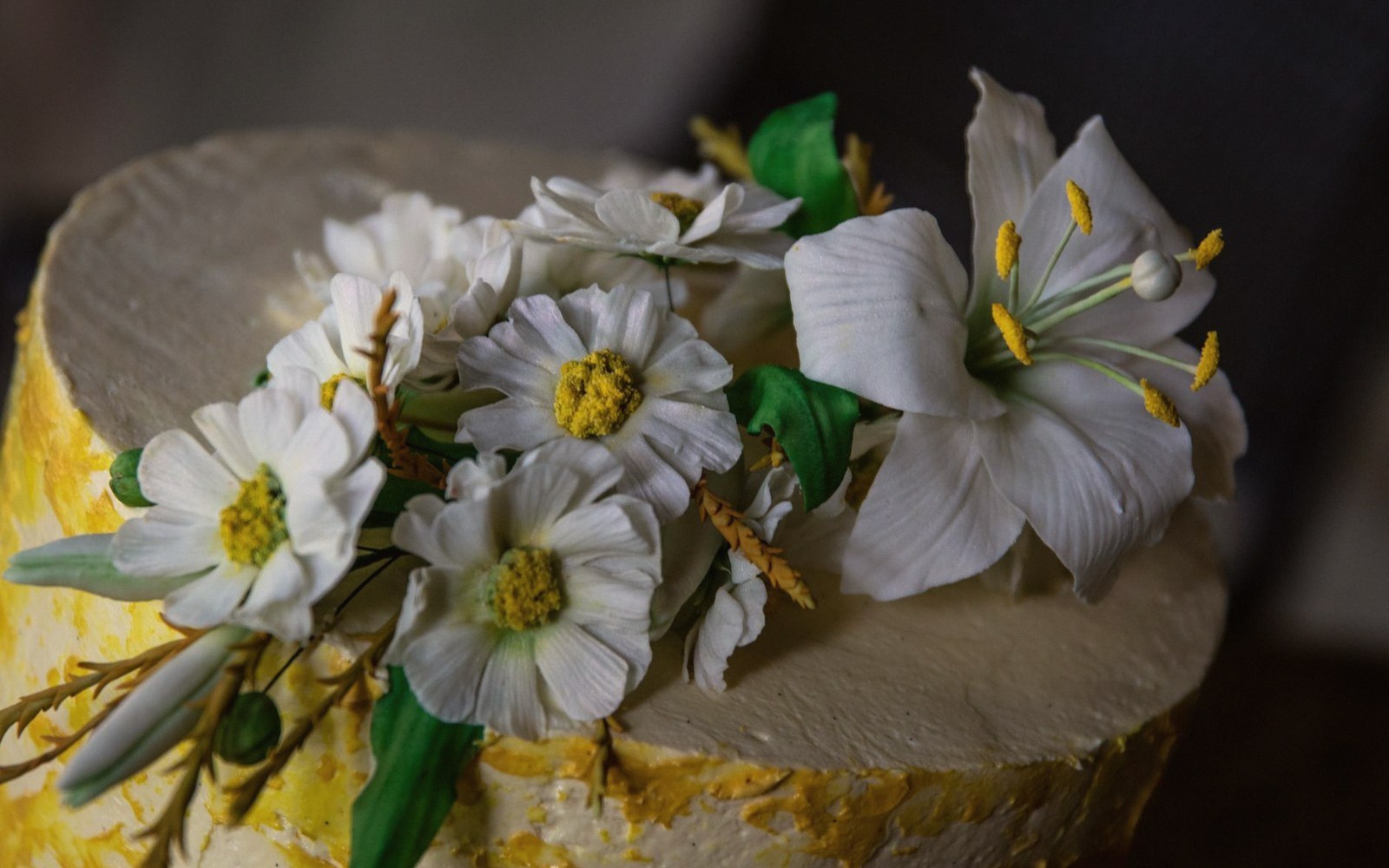
Weeks of silence before the day
A sugar flower is not decoration added at the end. It is a parallel project, running alongside the cake itself, often completed before the tiers are even baked.
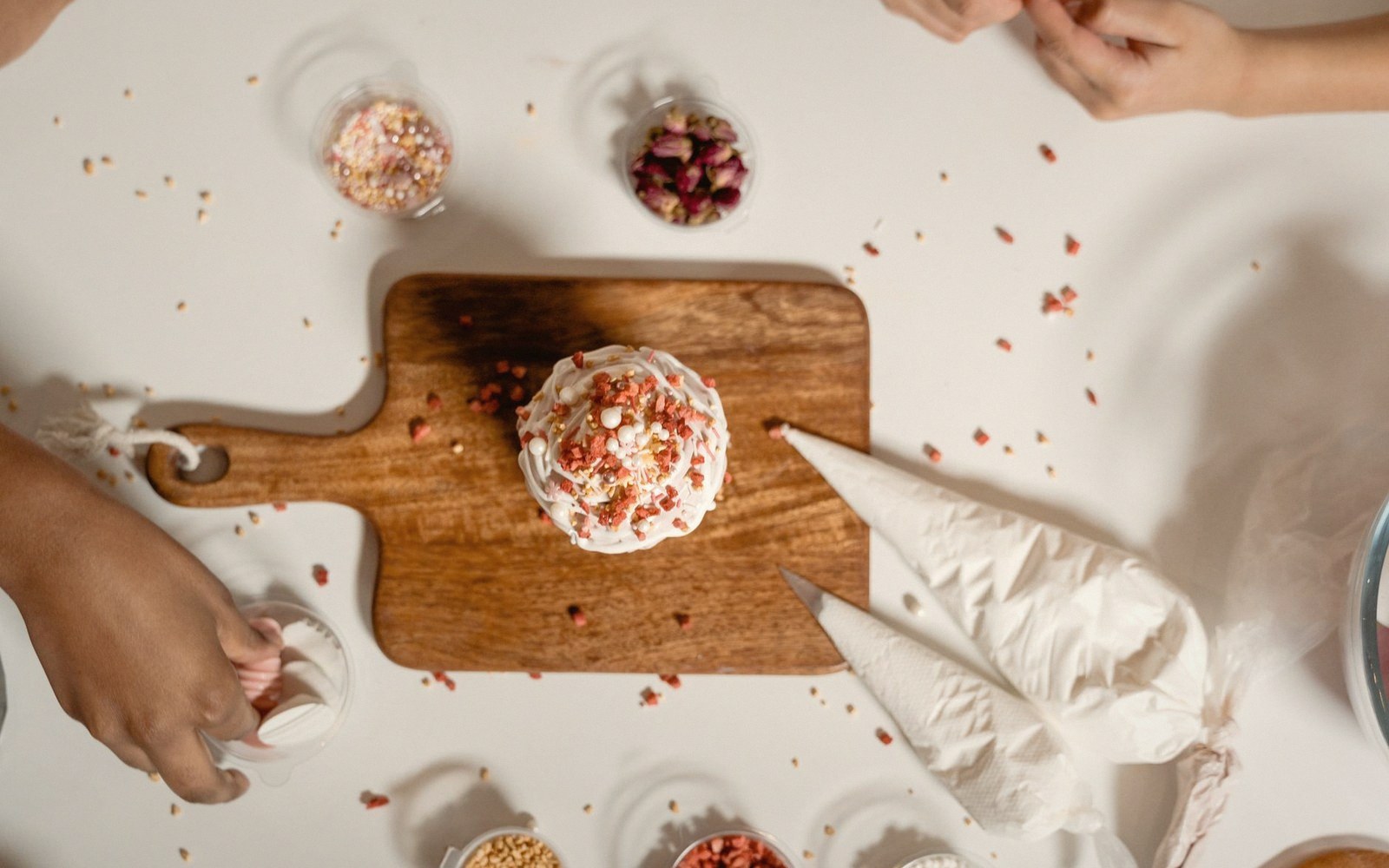
The medium is gum paste — a pliable sugar dough stiffened with tylose or gum tragacanth, both powdered stiffening agents that cause it to dry bone-hard. Unlike fondant, which stays soft, gum paste sets rigid and holds every crease and curve permanently once the moisture leaves. That drying time governs everything. A single peony — built petal by petal from thin-rolled paste, each layer shaped with a ball tool over a foam pad, the whole flower cupped and dried in a former — may take three or four sessions across a week, each stage waiting for the previous one to firm before the next is added. A full spray of several blooms, with foliage and hand-wired tendrils, might represent twenty or thirty hours of bench work spread across a fortnight.
Wire is central to the construction. Each petal is threaded onto a fine gauge florist wire while still soft, dried separately, then taped to a central stem using florist tape — the same paper-backed self-adhesive tape the real flower industry uses. Wiring allows the maker to pose and adjust the finished flower; it also means every wired element must be removed before a slice is cut, because floristry wire is not food-safe once it enters the cake body.
Colour comes in two stages. Petal dust — a dry powder pigment — is brushed on after drying, building depth and shadow in the recesses the way a botanical painter would. A second pass with a diluted food-colour wash, painted wet, can shift a petal's midtone. The colour is then set with a thin steam from a kettle held at distance: the brief humidity melts the surface sugars fractionally, setting the dust and producing a faint sheen without softening the structure underneath.
Storage is its own discipline. Gum paste is hygroscopic — it will draw moisture from the air and dissolve, or in high humidity simply collapse. Finished flowers are laid in open trays, not sealed containers, in a cool dry room: sealed packaging traps any residual moisture and destroys a week's work overnight. In practice this means a dedicated shelf, away from any kitchen steam, weeks before the wedding.
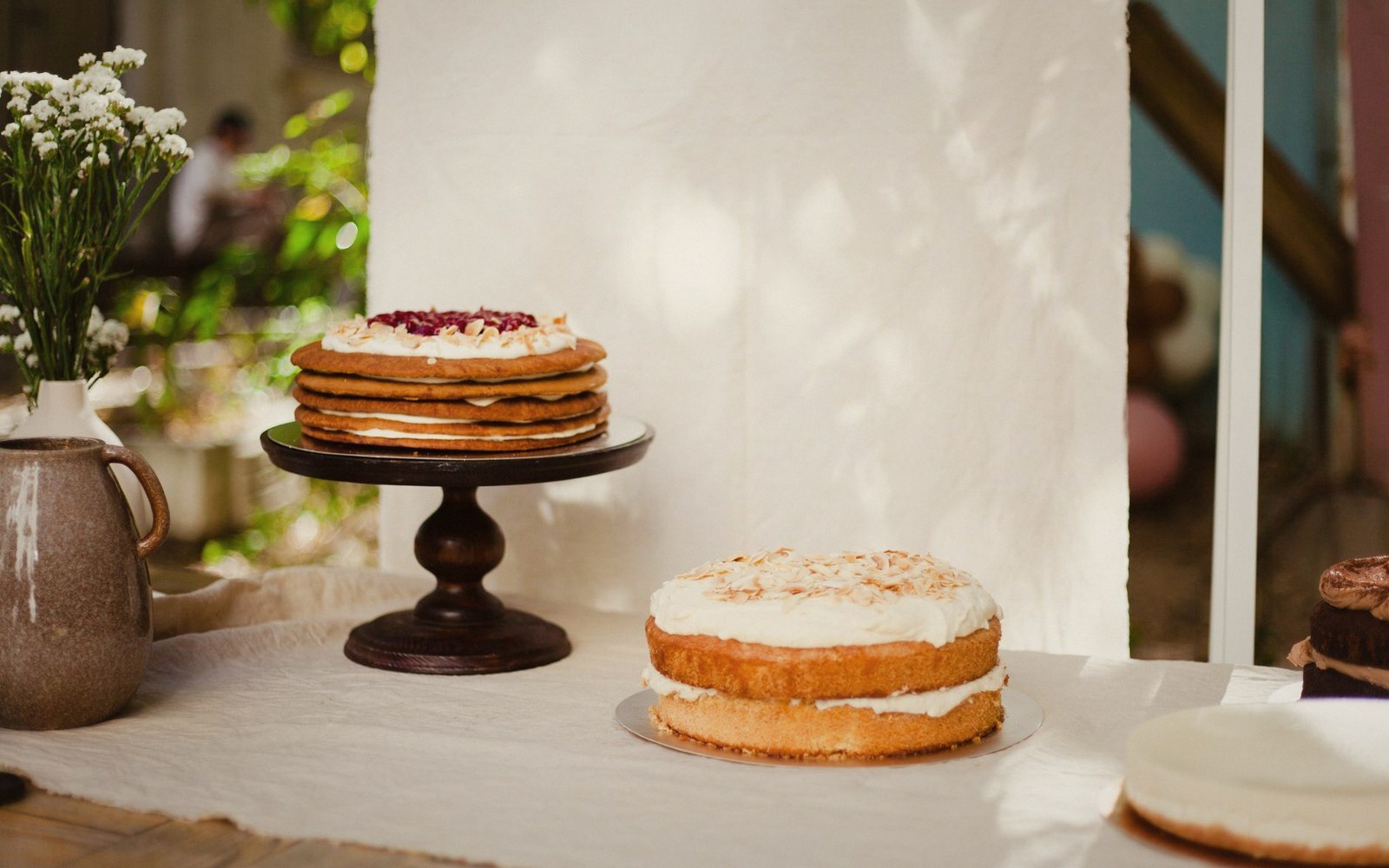
By the time the cake is assembled, the flowers are already long finished — still and perfect, waiting.