What the number does to the food
A restaurant turns a hundred covers over four hours; a wedding kitchen has to turn two hundred in twenty minutes. That single difference removes most of what a chef trained to do. Anything that is finished to order — a sauce mounted at the last second, a fish timed individually, a soufflé — is gone. What remains is a short list of dishes that can be cooked, held and plated in volume without dying in the process.
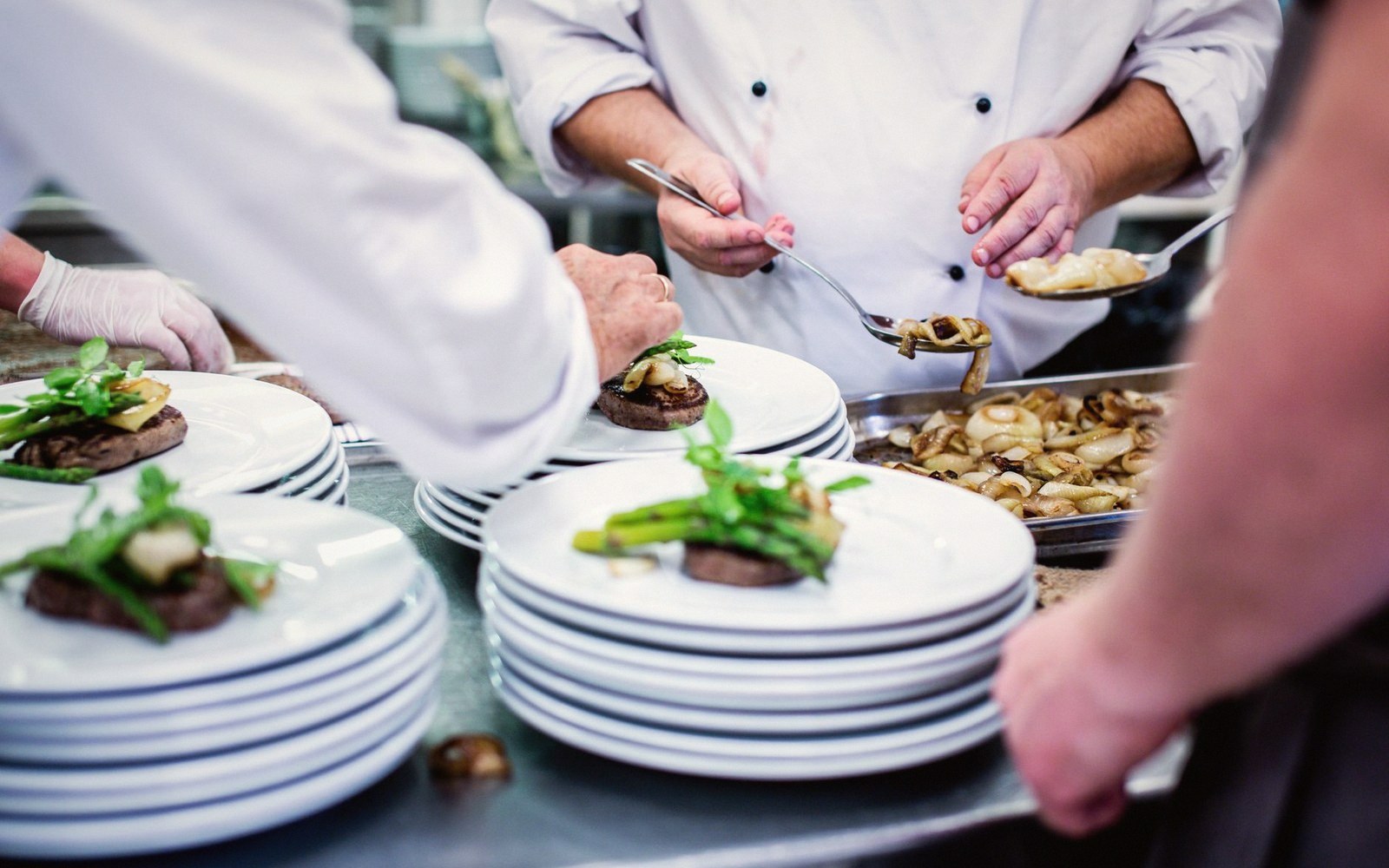
The menu does not come from preference alone. It comes from the arithmetic of the pass. If plating one dish takes eight seconds and there are two hundred plates, that is twenty-seven minutes from the first plate to the last — and a plate going out at the twenty-seven-minute mark will be cold before it arrives. The professional response is to reduce the plating steps, assign every hand a single task and run the pass like an assembly line rather than a restaurant service. Even then, the window between first plate and last is measured in minutes, and every dish on the menu has to survive that window without separating, drying, wilting or losing colour.
The dishes that work and the ones that don't
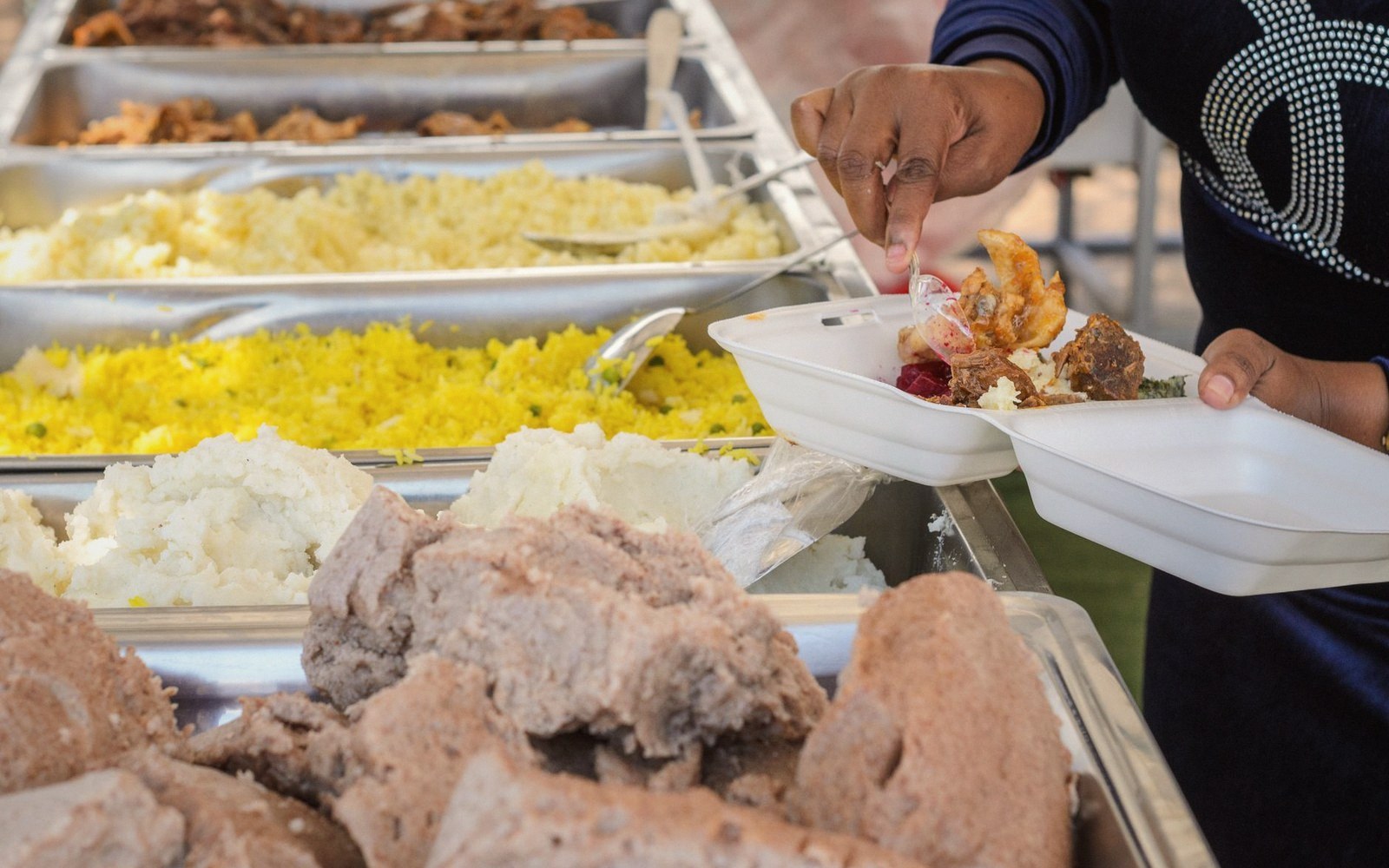
Proteins that hold are the ones that braise, confit or carry enough fat to stay moist under heat lamps. A breast of chicken, portioned and sauced, will survive the pass; a roast fillet of white fish will not. Beef works well when it is cooked to a resting point — a whole sirloin taken to temperature, rested long and sliced to order at carving stations — though carving stations introduce their own logistics: the queue, the traffic, the cold plate waiting. Plated beef, by contrast, means pre-sliced portions held in their own jus, which is fine provided the jus is generous and the serving dishes are preheated properly.
Vegetables are where most volume kitchens lose ground quietly. A blanched green bean that was perfect at noon is grey-green and soft by seven in the evening. The solutions are predictable — root vegetables that hold their texture, pulses, grains — and competent chefs know to design the vegetable component around what survives rather than what looks best on paper. A cauliflower purée holds. A dressed salad does not.
Sauces matter more at volume than they do in a restaurant, because the sauce is often what keeps a protein from tasting tired. A good reduction, made in quantity and finished with care, rescues a chicken thigh in a way that nothing else can. It also carries temperature effectively, which is why the conventional rule is to sauce the plate at the pass, not in the kitchen: the hot sauce over the rested protein is the last act of temperature management before the plate leaves the room.
The machinery behind it
Holding and regenerating is the unglamorous core of this kind of cooking. The real work happens earlier in the day — sometimes the day before — and the service itself is closer to a precision reheat than a cook. Combi ovens running at controlled humidity, bains-marie at exact temperatures, blast chillers to take food down quickly after the initial cook: these are the instruments. A catering kitchen operating without them is not slower; it is categorically unable to produce consistent food at this scale.
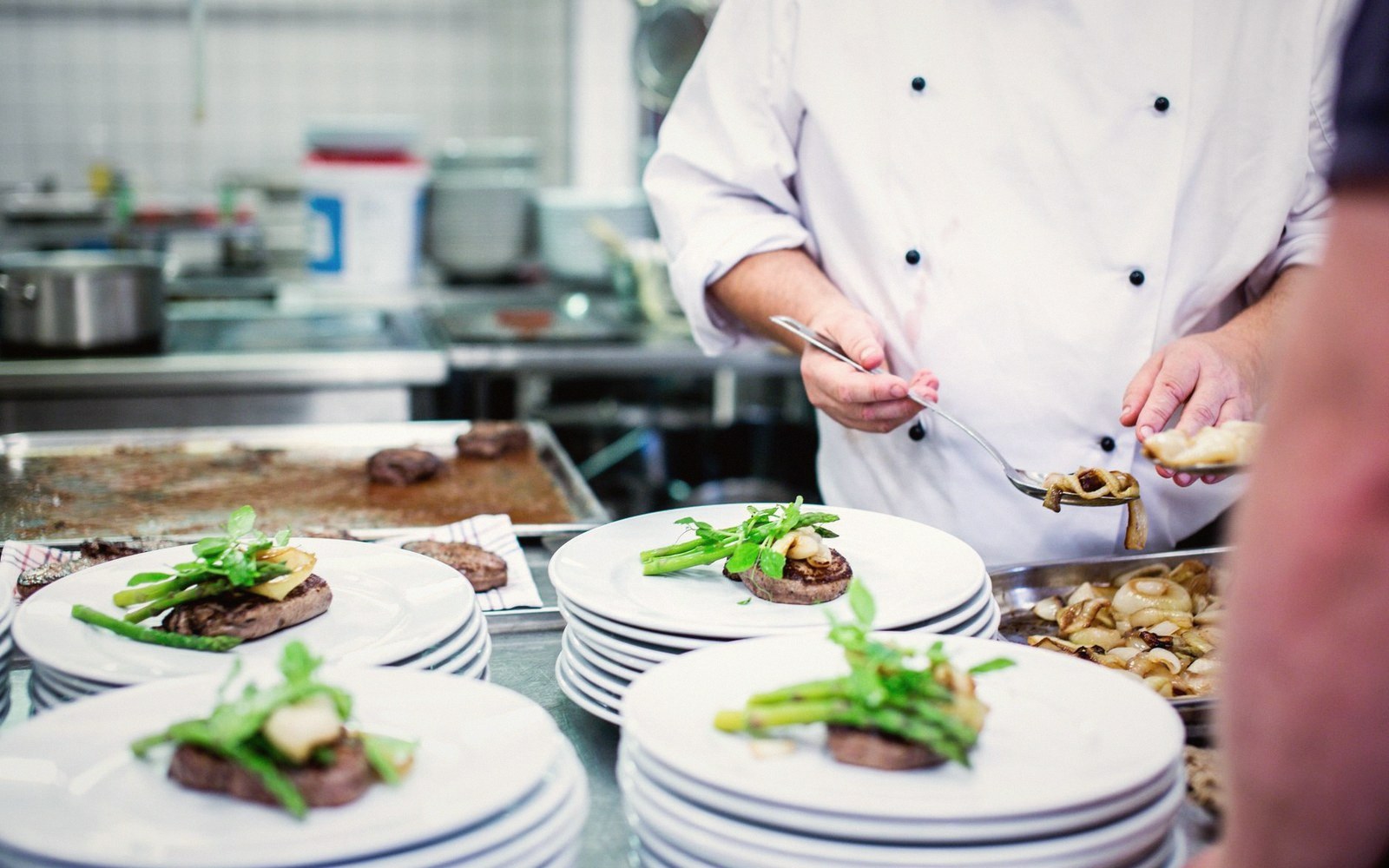
The pass itself is organised around speed and sequence. Starters clear before mains are plated; the kitchen runs the two services as separate operations with a reset in between. That reset — clearing, wiping down, repositioning, heating fresh serving dishes — takes only a few minutes but has to be planned in advance, because the kitchen you are given is rarely large enough to run both courses simultaneously without a system. The number on the brief is always two hundred. The number of surfaces is always fewer than you need.