
How lead type and a steel press make an impression the finger can feel
Letterpress is older than electricity, older than the nation-state, and it still has a waiting list. That fact alone tells you something: the process does something no digital alternative can replicate, and it does it in a way that is immediately, physically obvious. Run a fingertip across a letterpress-printed card and you feel the text before you read it.
What the press actually does
The mechanism is straightforward and has changed little since Gutenberg's fifteenth-century experiments with movable type. Inked type — or, today, a photopolymer plate made from a digital file — is pressed under controlled pressure into dampened cotton or cotton-rich paper. The result is a deboss: type sunk into the surface, leaving a relief impression on the reverse. That bite is not a side effect. For most of its commercial history, letterpress printers worked hard to minimise impression, aiming for a clean, level ink transfer rather than the dented surface a modern client pays a premium for. The aesthetic now considered the whole point was, for a century of industrial printing, a mark of insufficient makeready — the painstaking process of shimming and adjusting the press bed so every part of the forme hit the paper with equal force.
Makeready is still the skilled heart of the process. Before a single sheet runs, the press operator adjusts packing — layers of tissue, card or polymer beneath the printing surface — to bring type up to the precise contact height known as type-high, which in Anglo-American convention is 0.918 inches. Too little pressure and the ink sits on the surface rather than being kissed in; too much and the plate begins to distort fine letterforms, bleeding serifs and closing counters. Getting this right on a job with multiple colours, each requiring its own pass through the press, can take longer than the print run itself.
Setting type and making plates
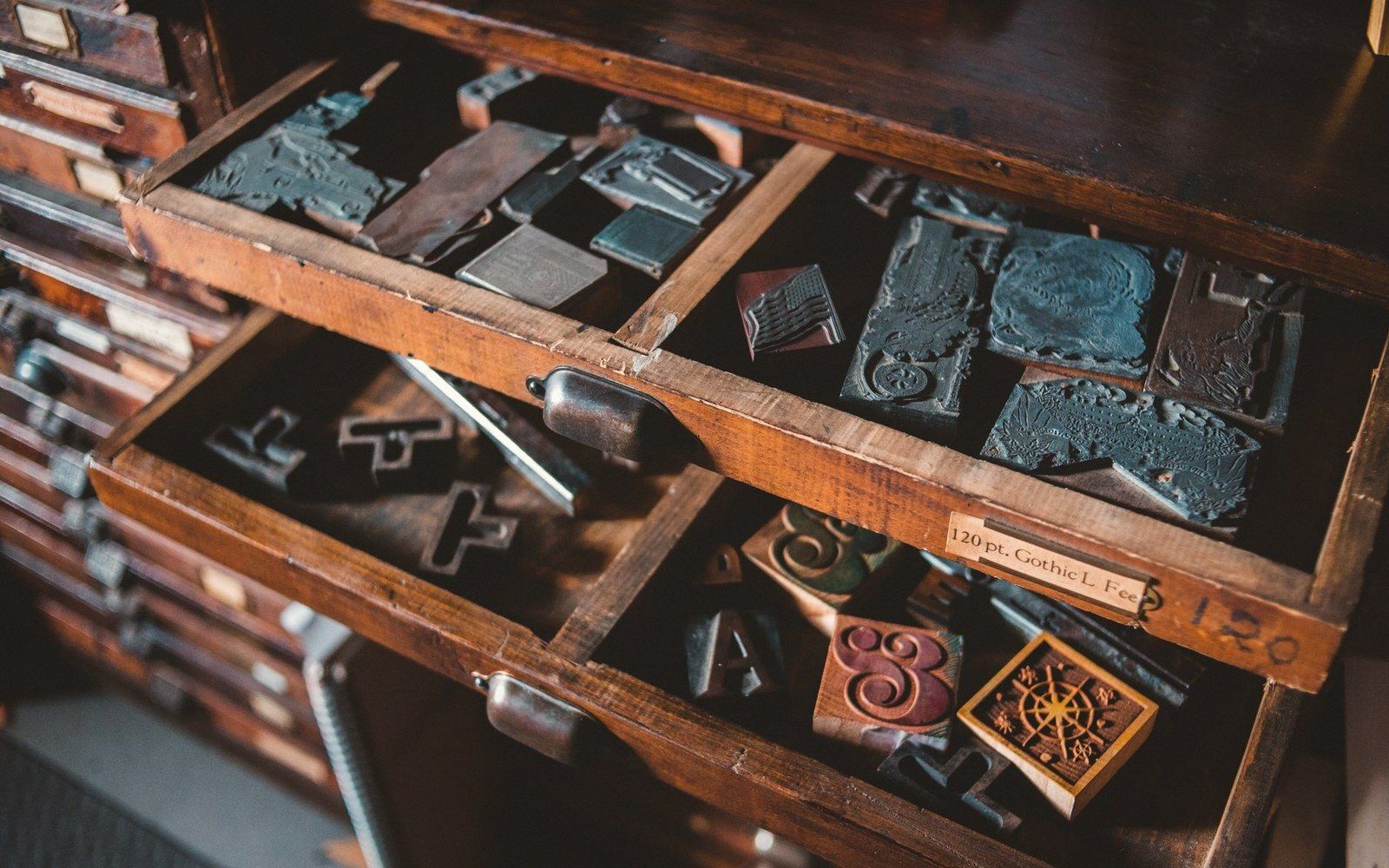
Two routes reach the press bed today. The first is genuine hand-setting: individual lead alloy sorts — letters, spaces, punctuation — pulled from a typecase and composed into a forme locked in a metal frame called a chase. This is slow by any measure, requires a mirror-reading compositor who can set type backwards by instinct, and is constrained to typefaces that were actually cast in metal. Lead type is set at 80% lead, 15% antimony (for hardness) and a small percentage of tin; the antimony is what keeps the face sharp through repeated impressions. A skilled compositor can set perhaps 1,500 characters an hour, which gives some sense of why hot-metal machines like the Linotype, which could cast a full line at a time, revolutionised commercial typesetting when they appeared in the 1880s.
The second route is the photopolymer plate, and it is how almost every contemporary letterpress studio works. A digital file — typically a high-resolution PDF with all text converted to outlines — is output as a film negative, then contact-printed onto a light-sensitive polymer sheet. Ultraviolet light hardens the exposed areas; the unexposed polymer washes away in water, leaving a relief plate ready to mount on the press base. The typeface library available this way is unlimited, and custom lettering, illustrations and fine detail translate faithfully, provided the artwork observes the plate's minimum recommended line weight.
Paper choice is inseparable from the result. The bite that makes letterpress legible by touch requires a sheet with genuine give: heavily sized or coated papers resist impression and produce a flat result closer to offset lithography. Cotton rag papers — sometimes called 100% cotton or cotton bond — compress cleanly under pressure and spring back only partially, holding the impression permanently. Crane's Lettra is among the most widely specified in the trade for exactly this reason, though any paper of sufficient cotton content and weight will behave similarly. Sheet weight matters too: a 220gsm stock takes a deeper bite than a 110gsm sheet of identical composition, simply because there is more fibre to compress.
Ink is oil-based and mixed by hand for most short runs, the printer working from a Pantone reference on a glass slab with a palette knife. Because letterpress deposits ink in a thin, consistent layer, the colour that comes off the press often reads slightly lighter than the Pantone chip predicts; experienced printers account for this and mix slightly heavier, checking drawdowns on the job stock before committing to a full run.
All of this is why letterpress survived long after offset made it commercially obsolete. Offset prints faster, wastes less paper and needs no makeready of this complexity. What it does not do is leave a mark you can feel.