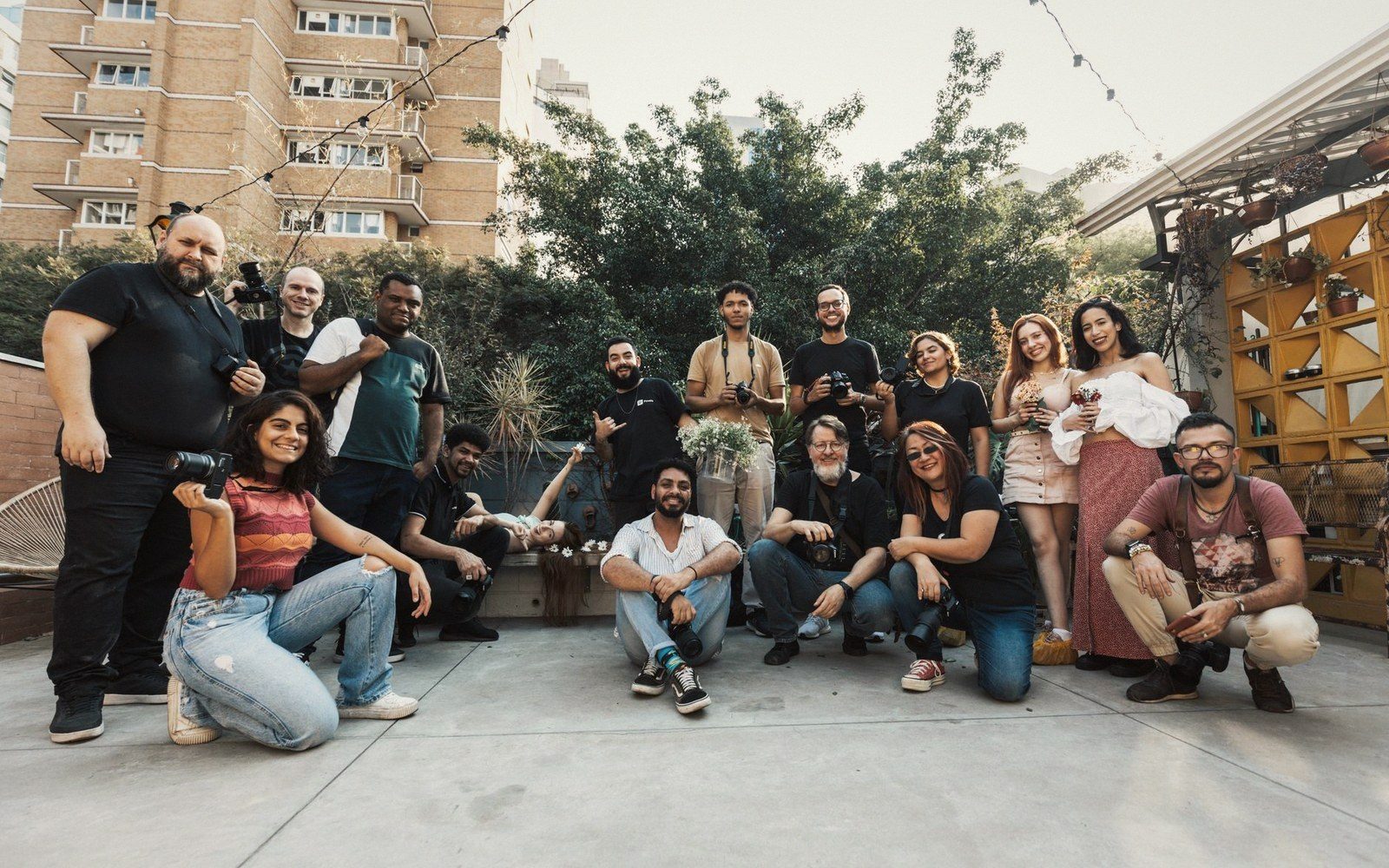
Getting Everyone into the Same Frame at the Same Time
A wedding photographer will plan for almost every picture in advance. The group shot is the one that plans back.
The challenge is not technical. A group of thirty or fifty people standing in reasonable light is not a complex exposure. The challenge is human: every person in the frame is a person with a drink, a conversation, a small child requiring attention, or a heel that has sunk into lawn. Getting them into position — correctly positioned, eyes open, not mid-blink, not turning away — at the same second, is the part no camera body or lens can solve.
Professional photographers who shoot weddings regularly develop a vocabulary for it: a carrying voice, clear directions, and the habit of never asking people to move without telling them exactly where to go. Vague instruction produces a slow, anxious shuffle. Precise instruction — "three steps left, turn to face me, stop" — produces a frame. The difference in time lost is significant when light is moving and the kitchen is running on a schedule.
Light is the other constraint. A large group spread across an outdoor space requires even illumination; the worst outcome is half the group in direct sun and half in open shade, which produces two different exposures in the same file. A photographer scouting the venue beforehand is looking for open shade — the north face of a building, a canopy, a tree line — where the whole group falls under the same quality of light. Overcast days are technically easier than clear ones for this reason, though no one commissions the weather.
Elevation helps. Standing above the group — on a step, a low wall, a raised terrace — lets the lens see every face without the front row blocking the back. It also reduces the depth the camera needs to keep sharp, which matters when a group extends several metres toward and away from the lens.
The number of frames shot in a single group-shot sequence is far higher than it looks. With fifty people, the statistical chance of every face being open and forward at any given instant drops fast. Bracketing through a burst of exposures and compositing the sharpest faces in post-production is common practice; the final single image may be several frames resolved into one. The finished print will hang on a wall for decades. The work behind it takes less than five minutes, and the five minutes are the hardest of the day.